Making enough insulin.
Early insulin was extracted from animal pancreases. Producing a reliable medicine meant solving problems of purification, potency and supply. Lilly’s early history shows how drug manufacturing became as important to a treatment’s reach as the discovery itself.
This episode follows the people and institutions involved in that work, and the company that grew around it. The accompanying illustrated essay, The Factory in Indianapolis, follows Lilly’s longer history through its laboratories, medicines and business decisions.
Scientific context
The production problem behind insulin
Early insulin treatment depended on extracts of animal pancreas. After the clinical work in Toronto, production required better purification and a consistent supply. Lilly began collaborating with the University of Toronto in 1922. Advances in isoelectric precipitation helped enable large-scale animal-insulin production in 1923. [1]
For a closer look
Selected reading
Background reading to accompany the episode.
Historical account · American Chemical Society
Insulin Development and CommercializationThe Toronto–Lilly collaboration, purification by isoelectric precipitation, and the transition from animal extracts to recombinant insulin.
Primary clinical report · 1922
Banting, Best, Collip, Campbell & Fletcher — Pancreatic Extracts in the Treatment of Diabetes MellitusAn early report of pancreatic extracts in patients, published in the Canadian Medical Association Journal. Read as a historical clinical report.
Not yet available.
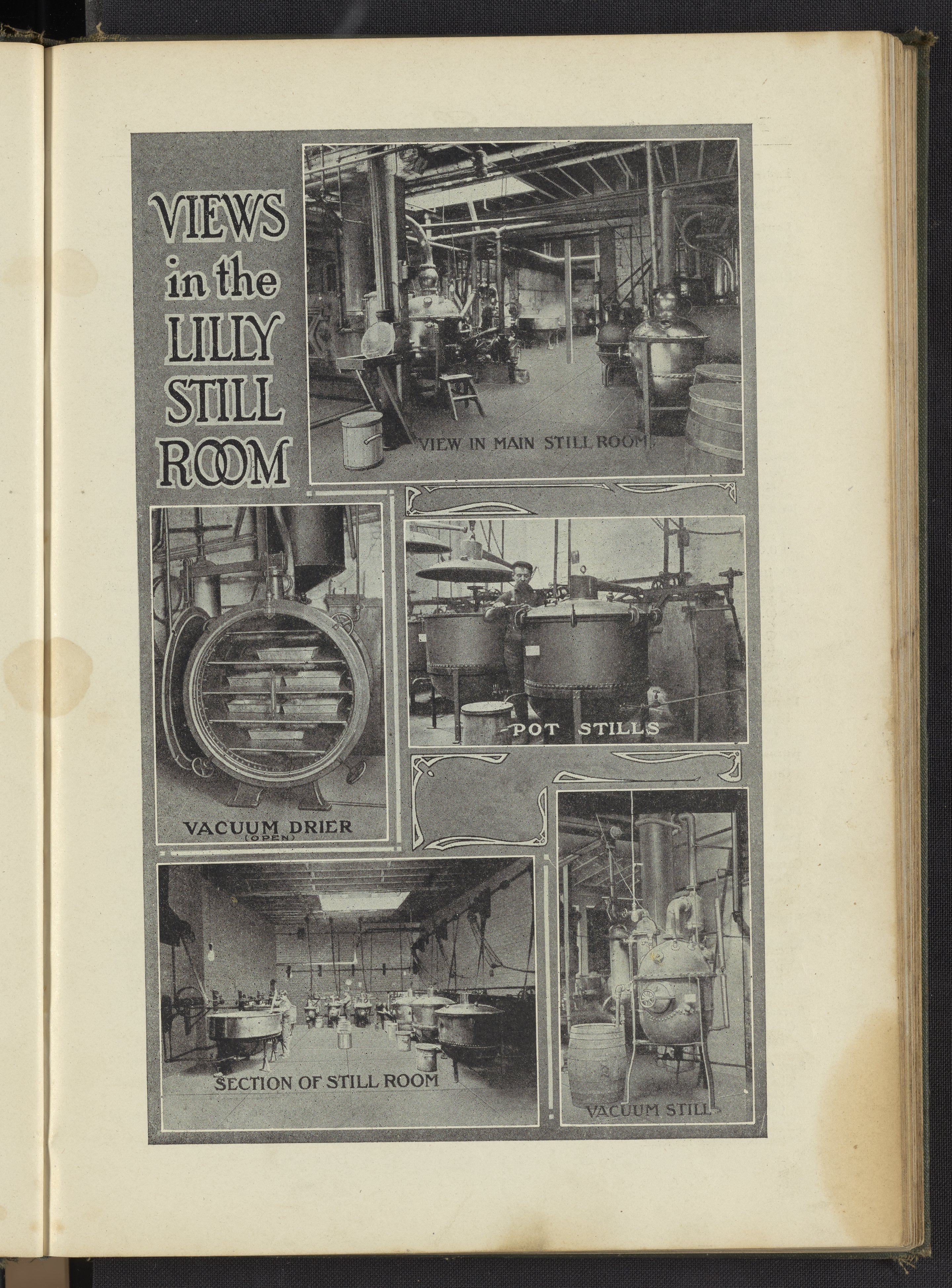
Image details
Eli Lilly and Company. Courtesy of Science History Institute. Public domain.
Views in the Lilly Still Room, from Hand Book of Pharmacy and Therapeutics, circa 1919. Used as an illustration.
Source image · Public Domain Mark 1.0
Resized for the web; cropped and combined with typography for this layout. Some layouts use a monochrome treatment.