Editorial approach
What we cover.
How we approach it.
Medicine gives us a particular view of time. Discoveries made a century ago still shape ordinary lives; work on a laboratory bench may alter the lives of people not yet born. The New Alchemist looks in both directions.
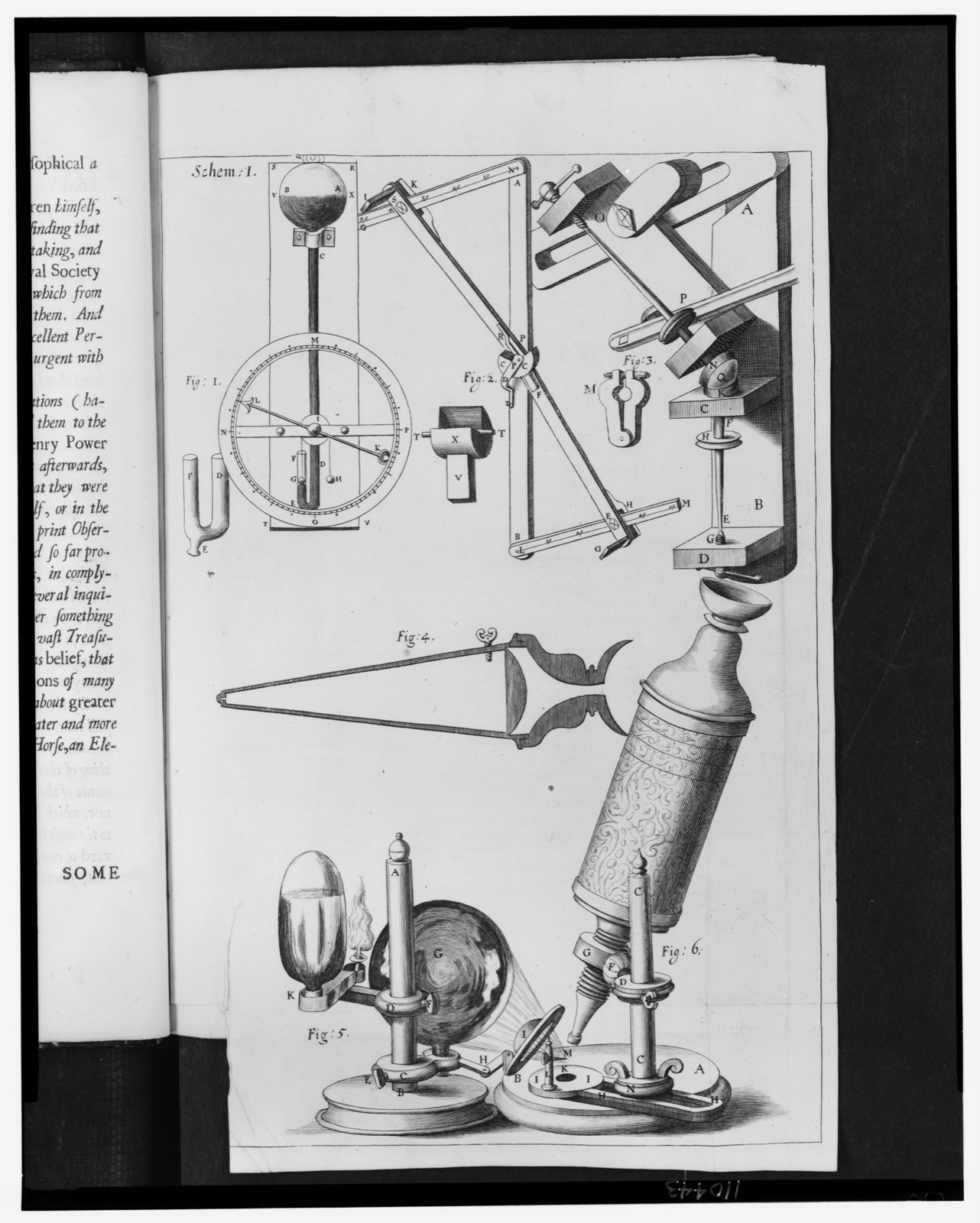 Robert Hooke’s
microscope.1665 / Micrographia
Image details
Robert Hooke, Micrographia (1665). Library of Congress, Prints and Photographs Division, cph.3c10443.
Microscope and optical apparatus illustrated in Robert Hooke's Micrographia, published in London in 1665. Used as an illustration.
Source image · Public domain; Public Domain Mark 1.0
Resized for the web; cropped and combined with typography for this layout. Some layouts use a monochrome treatment.
Discovery & its history
Insulin is now a familiar word. Once, it was a difficult extract in short supply. We return to the people who had to make it work, and to the laboratories and factories where modern medicine took shape. Knowing the outcome can make a discovery look inevitable. We want to recover the uncertainty that success tends to erase.
Read The Factory in Indianapolis · Listen to the Amgen story
Frontier biology
Living things are difficult material. A cell has its own machinery, its own history, and a habit of confounding a neat design. That makes the effort to engineer it all the more interesting. We follow the researchers turning an understanding of life into the ability to do something new with it.
AI in biology
A computer can search through possibilities no laboratory has time to test one by one. A prediction is the beginning of a biological story. We want to know what happens when the sequence leaves the screen: whether the protein folds, whether the cell responds, and whether the experiment changes what we thought we knew.
Medicine & business
A discovery needs a way into the world. Someone has to finance the trials and learn to make the medicine reliably. Decisions about price and distribution help determine who will receive it. The company making those decisions becomes part of the science’s history, as do the people who live with their consequences.
Our approach
Start with a question.
We are optimistic about what biology can do. Each story still has to explain how something works, what has been demonstrated and what remains uncertain. Failed experiments, competing explanations and the cost of making a discovery useful belong in the story too.
We publish podcasts and essays, with plans to develop video. Company histories let us examine decisions over decades; research notes look closely at a result; opinion pieces make an argument. In each format, readers should be able to distinguish the evidence from our interpretation.
How we choose our guests