The hormone that built Amgen.
Erythropoietin tells the body to produce red blood cells. Making it as a medicine became Amgen’s first major business. Deeya and Rohan follow the research behind Epogen, the company’s early financing and its consequential partnership with Johnson & Johnson.
The episode then follows Neupogen, the Immunex acquisition that brought Enbrel into Amgen, and the clinical evidence that raised safety questions about EPO treatment. It closes with newer medicines, including Repatha, and an examination of how manufacturers, insurers and pharmacy benefit managers influence drug prices.
CHAPTERS
Scientific context
From gene expression to clinical evidence
Lin and colleagues reported cloning the human EPO gene and producing biologically active protein in Chinese hamster ovary cells in 1985. That establishes a molecular result; clinical benefits and risks require studies in patients. The TREAT trial is one such study, specifically in people with type 2 diabetes, chronic kidney disease and anemia who were not receiving dialysis. [1] [2]
For a closer look
Selected reading
Background reading to accompany the episode.
Molecular biology · Original research · 1985
Lin et al. — Cloning and expression of the human erythropoietin geneThe gene-cloning and mammalian-expression work behind recombinant EPO. This experiment addresses biological activity, not clinical outcomes.
Clinical evidence · Randomized trial · 2009
Pfeffer et al. — TREATDarbepoetin alfa in patients with type 2 diabetes, chronic kidney disease and anemia. Read the treatment target, comparator and patient population alongside the results.
Not yet available.
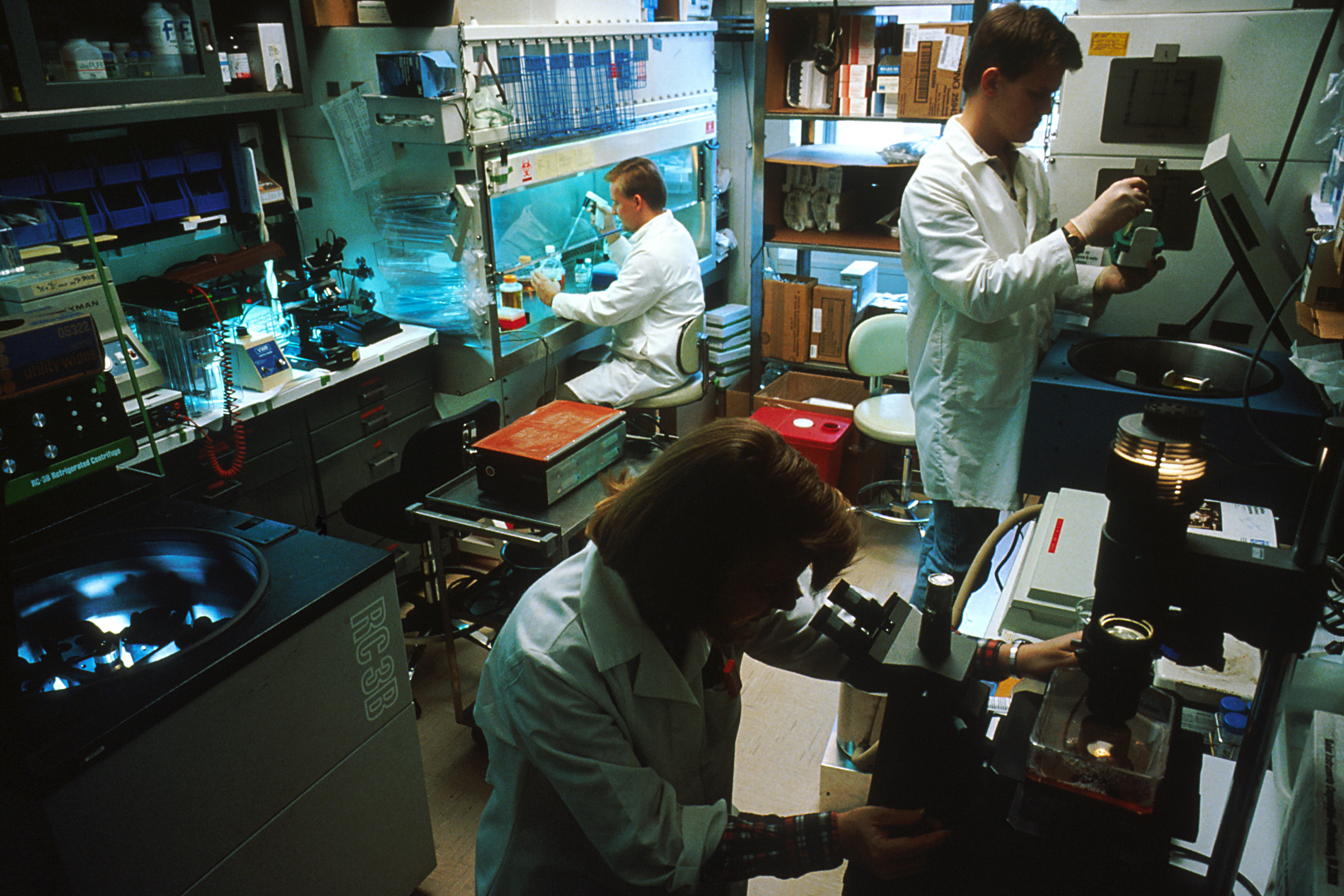
Image details
Bill Branson / National Cancer Institute. Public domain.
A basic research laboratory, 1989. Used as an illustration.
Source image · Public domain — NIH/NCI work; reuse restrictions none
Resized for the web; cropped and combined with typography for this layout. Some layouts use a monochrome treatment.