The Factory
in Indianapolis
How a 150-year-old company nobody can name became the first trillion-dollar medicine business, and what it says about where value in biotech actually lives
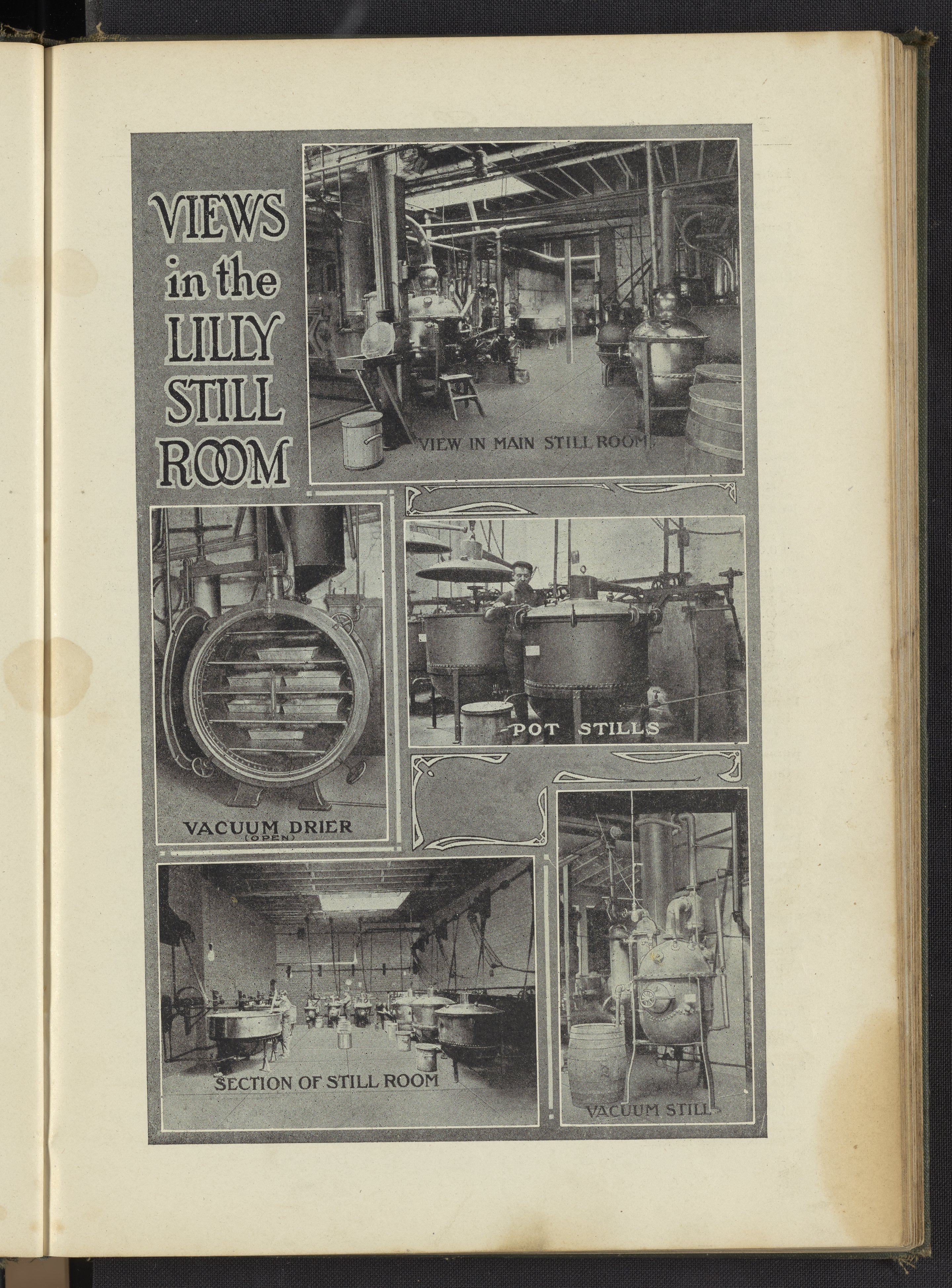
Image details
Eli Lilly and Company. Courtesy of Science History Institute. Public domain.
Views in the Lilly Still Room, from Hand Book of Pharmacy and Therapeutics, circa 1919. Used as an illustration.
Source image · Public Domain Mark 1.0
Resized for the web; cropped and combined with typography for this layout. Some layouts use a monochrome treatment.
On the afternoon of Friday, November 21, 2025, Eli Lilly and Company's market value crossed one trillion dollars. It was the first healthcare company anywhere to do it, and only the second American company outside technology, after Berkshire Hathaway. The stock has since gone higher. Lilly's revenue in 2025 was $65 billion; its guidance for 2026, raised twice this year, is $85 to $87 billion. In the second quarter of 2026 alone it booked $23 billion, up 48 percent on the year before.
Most people who take Lilly's medicines could not name its chief executive. Most people who work in technology could name the founders of most of the companies that reached a trillion dollars before it. The gap is not an accident of publicity. It is a fact about the kind of company Lilly is, and about the kind of business medicine is, and the two are connected in a way that is worth ten thousand words, because the connection is the thing that people arriving at biology from software most often get wrong.
The intuition from software is that the idea is the scarce thing. Find the insight, write the code, and distribution follows. Every valuation in the current wave of AI-for-biology companies is built on a version of that intuition: if you can design the molecule faster, you have solved the hard part. Lilly's history is a long argument that this is backwards. For a century and a half the company's edge has almost never been the discovery. The two biggest medicines of its first hundred years were invented by other people. The molecules it did invent itself made it enormous, and then produced the two worst episodes in its history. And the drug that carried it to a trillion dollars is the first time in a hundred and fifty years that Lilly's own molecule and Lilly's manufacturing muscle landed on the same product without a disaster attached.
One company.
Sixteen decades.
Follow the thread from an Indianapolis pharmacy to modern biotechnology. Select a decade to enter the story.
A century of change.
One medicine at a time.
Browse Lilly’s medicines by decade, or search for a name. Select a medicine to see its date and story.
Browse all 162 research entries
This chronology includes launches, approvals and other milestones. Unverified records remain research notes.
- late 1870s–80s · Gelatin-coated and sugar-coated pills; fruit flavourings — Delivery, not discovery — the first "innovative product" (Source check pending.)
- 1876 · Fluid extracts, elixirs, syrups; quinine — Plant-based preparations, hand-made; quinine for malaria among the first products (Source check pending.)
- 1883 · Succus Alterans — A nineteenth-century remedy marketed for syphilis and other conditions. This entry records a historical product, not evidence that it cured those diseases. (Source check pending.)
- 1886 onward · Empty gelatin capsules — Lilly among the first to fill empty capsules for exact dose; dedicated capsule plant 1894, automated (Source check pending.)
- 1898 · The product catalogue — The supplied notes describe a catalogue of 2,005 items at the founder’s death. This is a company milestone, not a drug approval. (Source check pending.)
- 1913 onward · Biological products from the Greenfield, Indiana plant — Serums and vaccines — smallpox, diphtheria/tetanus antitoxin (Source check pending.)
- 1917 · Typhoid vaccine — Ordered up by J.K. Sr. two months before US entry into WWI (Source check pending.)
- 1917 · Capsules, 2.5 million/day — World's largest capsule factory (Scientific American) (Source check pending.)
- 1923 · Iletin — First commercially available insulin in the US; Toronto licence signed 30 May 1922 (Source check pending.)
- 1923 (compound) / ~1929 (Sodium Amytal) · Amytal — Barbiturate sedative synthesised at Lilly by Horace Shonle and Alfred Moment (Source check pending.)
- ~1926 · Ephedrine — Bronchodilator/pressor; from K.K. Chen and Carl Schmidt's Penn work; Chen later joined Lilly (1929) (Source check pending.)
- 1928 · Liver Extract No. 343 — Pernicious anaemia; with Harvard's George Minot and William Murphy (Source check pending.)
- 1930 · Liver Extract No. 55 — Pernicious anaemia; with George Whipple (Rochester) (Source check pending.)
- 1930 · Merthiolate — Antiseptic and preservative; Morris Kharasch's compound, licensed to Lilly (Source check pending.)
- 1934 · Seconal — Barbiturate sedative-hypnotic, patented by Lilly (Source check pending.)
- 1936 · Protamine zinc insulin — First long-acting insulin, from Hagedorn's protamine work (Source check pending.)
- 1939 · Sulfapyridine — Sulfonamide antibiotic (Source check pending.)
- 1939 · Histamine phosphate — Diagnostic agent (Source check pending.)
- late 1940s · Tuinal — Combination barbiturate (Source check pending.)
- 1930s–40s · Menadione / Kappadione — Vitamin K preparations (Source check pending.)
- 1930s–40s · Neotrizine — Triple-sulfa preparation (Source check pending.)
- 1930s–40s · Calcium gluceptate — Calcium preparation (Source check pending.)
- 1930s–40s · Aerolone — Isoproterenol (Source check pending.)
- 1941 · Diethylstilbestrol — Synthetic oestrogen; Lilly one of ~300 makers (Source check pending.)
- 1941 · Sulfadiazine — Sulfonamide antibiotic (Source check pending.)
- 1943–45 · Penicillin — Mass production under the government programme (Source check pending.)
- 1943–45 · Dried blood plasma — With the American Red Cross: >2 million pints, ~20% of the US total (Source check pending.)
- 1943–45 · Encephalitis vaccine, typhus and influenza vaccines, gas gangrene antitoxin, antimalarials — Wartime products (Source check pending.)
- 1944 · Heparin sodium — Anticoagulant, NDA 5521 (Source check pending.)
- 1947 · Dolophine — First US distributor; rights bought from confiscated IG Farben/Hoechst patents for $1 (Source check pending.)
- 1947 · Tubocurarine and — Curare-derived muscle relaxants for anaesthesia (Source check pending.)
- 1947 · Folic acid — Vitamin preparation (Source check pending.)
- 1947 · Propylthiouracil — Antithyroid medicine (Source check pending.)
- 1950 · NPH Iletin — Intermediate-acting insulin (Source check pending.)
- 1950 · Tapazole — Antithyroid drug (Source check pending.)
- 1950 · Seconal Sodium — The 1934 barbiturate, formally approved (Source check pending.)
- mid-1950s · V-Cillin / V-Cillin K — Oral penicillin (Source check pending.)
- 1950 · Quinidine gluconate — Antiarrhythmic medicine (Source check pending.)
- 1950s · Duracillin A.S. — Procaine penicillin (Source check pending.)
- 1950s · Streptomycin — Antibiotic (Source check pending.)
- 1950s · Neomycin — Antibiotic (Source check pending.)
- 1950s · Bacitracin — Antibiotic (Source check pending.)
- 1950s · Isoniazid — Tuberculosis medicine (Source check pending.)
- 1950s · Dicurin — Mercurial diuretic (Source check pending.)
- 1950s · Histalog — Gastric test agent (Source check pending.)
- 1950s · Sandril — Reserpine (Source check pending.)
- 1952 · Ilotycin — First macrolide antibiotic; Philippines soil sample, Robert Bunch and James McGuire (Source check pending.)
- 1953 · Pagitane — Cycrimine, a Parkinson’s medicine (Source check pending.)
- 1954 · Elanco formed — Animal health and agriculture (Tylan/tylosin 1961, Treflan 1963) (Source check pending.)
- 1955 · Salk poliomyelitis vaccine — Poliomyelitis vaccine. Lilly and Parke-Davis supplied vaccine for the 1954 field trial; licensing followed in 1955. (Source check pending.)
- 1955 · Valmid — Dista sedative (Source check pending.)
- 1957 · Darvon — Opioid analgesic (Source check pending.)
- 1958 · Vancocin — Glycopeptide antibiotic; Borneo soil, Edmund Kornfeld (Source check pending.)
- 1958 · Ilosone — Oral erythromycin ester (Source check pending.)
- 14 Nov 1960 · Glucagon — First commercial glucagon, for severe hypoglycaemia; extracted from pancreas (Source check pending.)
- 1960 · Brevital — Ultra-short-acting barbiturate anaesthetic (Source check pending.)
- 1961 · Velban — First vinca alkaloid; Madagascar periwinkle, Gordon Svoboda (Source check pending.)
- 1961 · Haldrone — Corticosteroid; anabolic steroid for breast cancer (Source check pending.)
- 1962 · Novrad — Antitussive, Darvon's mirror-image (Source check pending.)
- 1963 · Oncovin — Vinca alkaloid; childhood leukaemia, lymphoma (Source check pending.)
- 1963 · Cordran — Topical steroid; diuretic (Source check pending.)
- 1964 · Keflin — First cephalosporin in the US; from the Oxford/NRDC licence (Source check pending.)
- 6 Nov 1964 · Aventyl — Tricyclic antidepressant (Source check pending.)
- 23 Dec 1964 · Dymelor — Oral sulfonylurea for type 2 diabetes (Source check pending.)
- 1964 · Seromycin — Second-line TB antibiotic (Source check pending.)
- 1965 · An early psychiatric medicine — From the Prozac research notes (Source check pending.)
- 1968 · Loridine — Injectable cephalosporin (Source check pending.)
- 1970 · Kafocin — Oral cephalosporin, short-lived (Source check pending.)
- 1970s · Progesterone — Hormone preparation (Source check pending.)
- 1970s · Dicumarol — Anticoagulant (Source check pending.)
- 1970s · Crystodigin — Digitoxin (Source check pending.)
- 1970s · Quinidine sulfate — Antiarrhythmic medicine (Source check pending.)
- 1970s · Methyltestosterone — Hormone preparation (Source check pending.)
- Jan 1971 · Keflex — Oral cephalosporin (Source check pending.)
- 1971 · Capastat — Injectable TB antibiotic, from Lilly's soil programme (Source check pending.)
- 1971 · Darvon-N — Reformulated Darvon (Source check pending.)
- 1971 · Elizabeth Arden acquired — Cosmetics, $38M (Source check pending.)
- 1972 · Darvocet-N — Analgesic combination (Source check pending.)
- 1972 · Keflet — Cephalexin tablets (Source check pending.)
- 1973 · Kefzol — Injectable cephalosporin (Source check pending.)
- 1973 · Betalin / Deltalin / Hexa-Betalin / Alphalin — Vitamin preparations (Source check pending.)
- 1975 · Nebcin — Aminoglycoside antibiotic (Source check pending.)
- 9 Jun 1977 · Nalfon — NSAID, sold under the Dista label (Source check pending.)
- 1977–92 · Device acquisitions — IVAC, Cardiac Pacemakers, Physio-Control, ACS, Hybritech, DVI (Source check pending.)
- 1978 · Dobutrex — Inotrope for heart failure; Lilly's Ronald Tuttle and Jack Mills (Source check pending.)
- 1978 · Mandol — Second-generation cephalosporin (Source check pending.)
- 1979 · Ceclor — Oral cephalosporin (Source check pending.)
- 1980 · Iletin II — Single-species purified pork/beef insulins (Source check pending.)
- Jun 1980 · Cinobac — Quinolone antibiotic for urinary infections (Source check pending.)
- 1981 · Moxam — Cephalosporin-class antibiotic (Source check pending.)
- Apr 1982 · Oraflex — NSAID, aggressive launch (Source check pending.)
- 28 Oct 1982 · Humulin — Recombinant human insulin. The 1982 FDA approval made it possible to manufacture human insulin using recombinant DNA technology.
- 1985 · Tazidime — Third-generation cephalosporin, co-marketed with Glaxo's Fortaz (Source check pending.)
- 1986 · Kefurox — Co-marketed cephalosporin (Source check pending.)
- 1986 / 1987 · Humatrope — Somatropin, recombinant human growth hormone. The supplied register date is 1986; the current product label states initial U.S. approval in 1987. (Source check pending.)
- Oct 1987 · Keftab — Cephalexin tablet reformulation (Source check pending.)
- 29 Dec 1987 · Prozac — Fluoxetine, an SSRI. U.S. approval came in December 1987; commercial introduction followed in 1988.
- Apr 1988 · Axid — H2 blocker for ulcers (Source check pending.)
- 1989 · Permax — Dopamine agonist for Parkinson's, Lilly's own compound (Source check pending.)
- 29 Dec 1989 · Decabid — Antiarrhythmic (Source check pending.)
- Dec 1991 · Lorabid — Carbacephem antibiotic (Source check pending.)
- 1993 · Fialuridine — Investigational hepatitis B medicine. The clinical trial stopped in 1993 after severe toxicity; it was never approved. (Source check pending.)
- Dec 1994 · ReoPro — Anti-platelet antibody for angioplasty; Centocor (Source check pending.)
- 1994 · PCS Health Systems acquired — PBM, ~$4B (Source check pending.)
- May 1996 · Gemzar — Pancreatic, then lung cancer (Source check pending.)
- Jun 1996 · Humalog — Insulin lispro. A rapid-acting insulin analogue approved in 1996, extending Lilly’s insulin franchise.
- 30 Sep 1996 · Zyprexa — Atypical antipsychotic; Erl Wood, 1982 compound (Source check pending.)
- 1996 · Ceclor CD — Extended-release cefaclor (Source check pending.)
- Dec 1997 · Evista — SERM for osteoporosis (Source check pending.)
- 1998 · Glucagon — Recombinant glucagon replaces the pancreatic extract (Source check pending.)
- Jul 1999 · Actos — Type 2 diabetes; Takeda's drug, co-promoted by Lilly (Source check pending.)
- Dec 1999 · Humalog Mix 75/25 and Mix 50/50 — Premixed analogues (Source check pending.)
- Apr 2000 · Zyprexa Zydis — Orally disintegrating olanzapine (Source check pending.)
- Jul 2000 · Sarafem — Prozac renamed for premenstrual dysphoric disorder (Source check pending.)
- Feb 2001 · Prozac Weekly — Once-weekly fluoxetine (Source check pending.)
- Nov 2001 · Xigris — Drotrecogin alfa (activated), approved in 2001 for selected adults with severe sepsis at high risk of death. (Source check pending.)
- Nov 2002 · Forteo — Teriparatide, a bone-forming treatment for osteoporosis, approved in 2002. (Source check pending.)
- Nov 2002 · Strattera — Atomoxetine, a nonstimulant medicine for ADHD, approved in 2002. (Source check pending.)
- Nov 2003 · Cialis — Erectile dysfunction; Lilly ICOS joint venture (Source check pending.)
- Dec 2003 · Symbyax — Bipolar depression (Source check pending.)
- Feb 2004 · Alimta — Mesothelioma, then lung cancer (Source check pending.)
- Aug 2004 · Cymbalta — Duloxetine, an SNRI. Depression and diabetic peripheral neuropathic pain approvals followed separate regulatory decisions in 2004.
- 2004 · Yentreve — Stress urinary incontinence (Source check pending.)
- Apr 2005 · Byetta — First GLP-1 receptor agonist; Amylin, from Gila monster venom (Source check pending.)
- 2008 · Erbitux · ImClone acquisition — Colorectal and head-and-neck cancer (Source check pending.)
- May 2009 · Adcirca — Cialis's molecule for pulmonary arterial hypertension; marketed by United Therapeutics (Source check pending.)
- Jul 2009 · Effient — Anti-platelet; Daiichi Sankyo (Source check pending.)
- Dec 2009 · Zyprexa Relprevv — Long-acting injectable olanzapine (Source check pending.)
- Nov 2010 · Axiron — Underarm testosterone; Acrux (Source check pending.)
- May 2011 · Tradjenta — DPP-4 inhibitor; Boehringer Ingelheim alliance (Jan 2011) (Source check pending.)
- 2011–14 · The cliff — Zyprexa generic Oct 2011; Cymbalta Dec 2013; Evista Mar 2014 (Source check pending.)
- Apr 2012 · Amyvid — First amyloid PET imaging agent; Avid Radiopharmaceuticals (Source check pending.)
- Apr 2014 · Cyramza — Antibody for gastric, lung, liver cancer; from ImClone (Source check pending.)
- Aug 2014 · Jardiance — SGLT2 inhibitor; Boehringer Ingelheim (Source check pending.)
- Sep 2014 · Trulicity — Once-weekly GLP-1, Lilly's own (Source check pending.)
- Nov 2015 · Portrazza — Squamous lung cancer antibody (Source check pending.)
- Dec 2015 · Basaglar — First "follow-on" insulin in the US; with Boehringer (Source check pending.)
- Mar 2016 · Taltz — IL-17A antibody for psoriasis, then psoriatic arthritis, axial SpA (Source check pending.)
- Oct 2016 · Lartruvo — Soft-tissue sarcoma, accelerated approval (Source check pending.)
- Sep 2017 · Verzenio — CDK4/6 inhibitor, breast cancer (Source check pending.)
- Jun 2018 · Olumiant — JAK inhibitor for rheumatoid arthritis; Incyte (Source check pending.)
- Sep 2018 · Emgality — CGRP antibody for migraine prevention; cluster headache 2019 (Source check pending.)
- Jul 2019 · Baqsimi — First needle-free rescue glucagon; Locemia (Source check pending.)
- Oct 2019 · Reyvow — Acute migraine; CoLucid ($960M) (Source check pending.)
- 2019 · Loxo Oncology acquired, ~$8B — Brings selpercatinib and pirtobrutinib (Source check pending.)
- May 2020 · Retevmo — RET inhibitor, thyroid and lung cancer; Loxo (Source check pending.)
- May 2020 · Tauvid — First tau PET imaging agent; Avid (Source check pending.)
- Jun 2020 · Lyumjev — Ultra-rapid mealtime insulin (Source check pending.)
- Nov 2020 · Bamlanivimab — COVID-19 monoclonal antibody. Authorized for emergency use in 2020; the single-agent authorization was revoked in 2021. (Source check pending.)
- Dec 2021 · Rezvoglar — Insulin glargine-aqlr. Initial approval in December 2021; interchangeable designation followed in November 2022. (Source check pending.)
- Feb 2022 · Bebtelovimab — COVID-19 monoclonal antibody. Emergency use authorization in 2022 was distinct from full FDA approval. (Source check pending.)
- 13 May 2022 · Mounjaro — First dual GIP/GLP-1 agonist, type 2 diabetes (Source check pending.)
- Jan 2023 · Jaypirca — Non-covalent BTK inhibitor, mantle cell lymphoma, then CLL; Loxo (Source check pending.)
- Oct 2023 · Omvoh — IL-23 antibody, ulcerative colitis; Crohn's Jan 2025 (Source check pending.)
- 8 Nov 2023 · Zepbound — Obesity; obstructive sleep apnoea Dec 2024 (first drug for OSA) (Source check pending.)
- Jul 2024 · Kisunla — Anti-amyloid antibody, early Alzheimer's (Source check pending.)
- Sep 2024 · Ebglyss — IL-13 antibody, atopic dermatitis; Dermira/Almirall (Source check pending.)
- Sep 2025 · Inluriyo — Oral SERD, ESR1-mutated ER+/HER2- breast cancer (Source check pending.)
- 1 Apr 2026 · Foundayo — Orforglipron. An oral GLP-1 medicine approved on April 1, 2026 for weight management in eligible adults.
- 23 Sep 2026 · Onswik — Insulin efsitora alfa-gobe. A once-weekly basal insulin approved for adults with type 2 diabetes. The FDA approval date is September 23, 2026.
- Sep 2026 · Olumiant, severe alopecia areata age 12+ — Paediatric expansion (Source check pending.)
- filed 2026 · The next clinical chapter — The research notes list a U.S. filing for orforglipron in type 2 diabetes and a later filing target for retatrutide. Applications and planned submissions are not approvals. (Source check pending.)
A decision to sell to fewer people
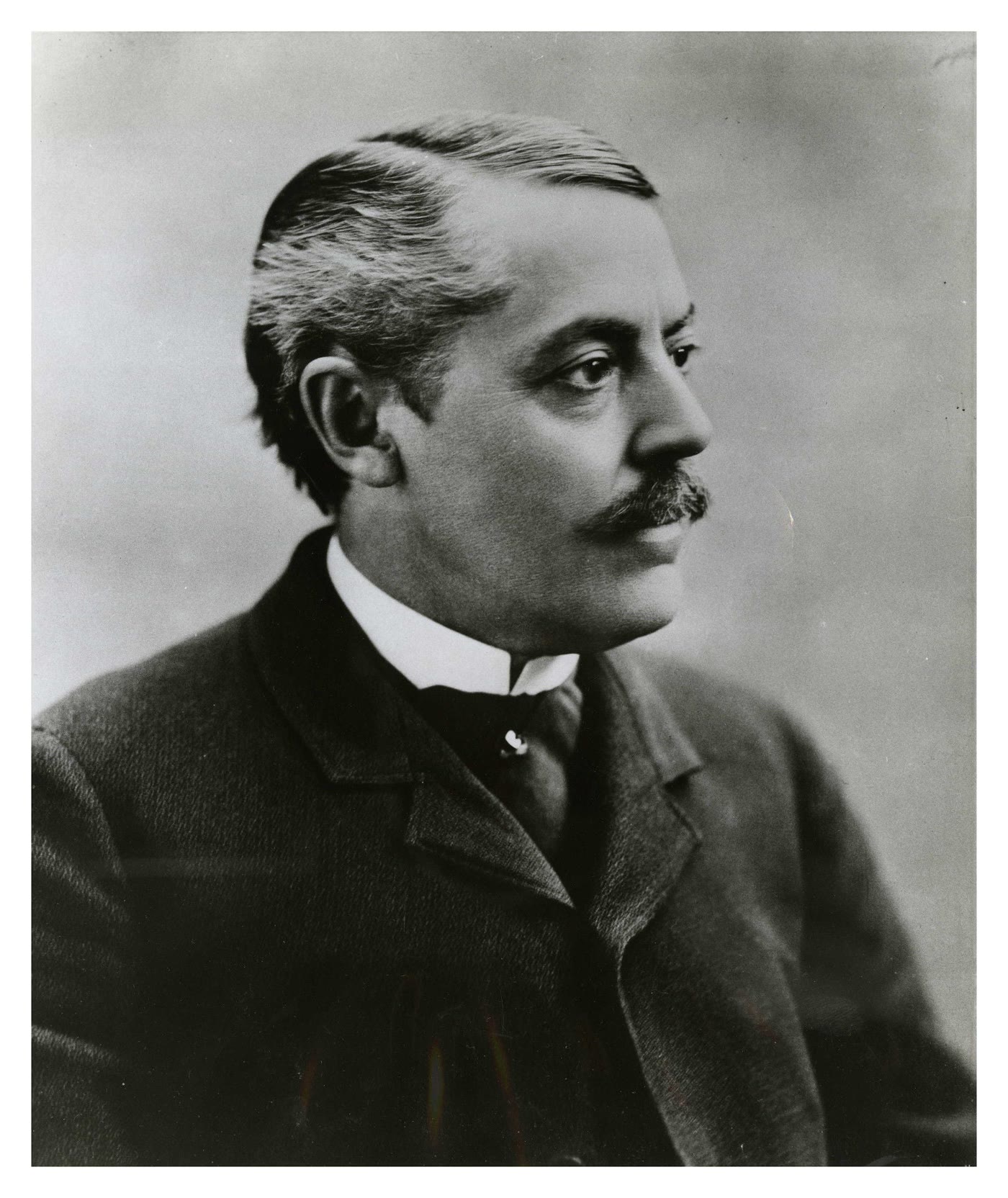
The company that would become the most valuable in medicine opened on May 10, 1876, in a rented two-story building at 15 West Pearl Street in Indianapolis, with a sign that read "Eli Lilly, Chemist," three employees, and about $1,400 in working capital. One of the employees was the founder's fourteen-year-old son. Sales in the first year were $4,470.
The founder was thirty-seven and had already failed at most things. Eli Lilly had apprenticed in a Lafayette drugstore at sixteen, opened his own store in Greencastle in January 1861, and within months had left it to fight for the Union, raising his own artillery battery and coming out with the rank that stuck to him for life. After the war he leased a cotton plantation in Mississippi and moved his wife and small son there. The family caught malaria; his wife died eight months pregnant, the baby stillborn. Drought killed the crop, his partner disappeared with the cash, and by 1868 he was bankrupt. Eight years of working for other people and one failed partnership followed, before a friend who ran a drugstore told him to stop looking for a job and start manufacturing, and promised to buy what he made.
None of that would matter to the story if the business he then built had been an ordinary one. It was not, and the reason is what American medicine looked like in 1876. There was no federal drug regulator and would not be one for thirty years. The dominant business was patent medicine: proprietary concoctions with secret formulas, mostly alcohol and opiates in colored bottles, sold with extravagant claims and no legal obligation to contain what the label said. The patent-medicine men were running an advertising business that happened to ship liquid. Their edge was the copy.
Lilly's early product line looked, at first, like theirs. Fluid extracts, elixirs, and syrups worked up by hand from plant material; quinine for the malaria that had killed his wife. What separated the company was not what it sold but how it decided to sell it, and the decision was to sell to fewer people on purpose. Lilly sold only to physicians and pharmacists, not to the public. It did not advertise to patients. And its technical differentiator was not a formula but a coating: gelatin and sugar coatings and fruit flavorings that made medicines swallowable, especially for children, and, more importantly, a reliable and consistent dose from one batch to the next. In a market where the product was a promise, Lilly's product was repeatability.
This is the point at which most corporate histories reach for the founding myth, and the company's own is a good one. In 1883 Lilly began selling Succus Alterans, a botanical preparation marketed as a blood purifier and a treatment for syphilis, rheumatism, eczema, and psoriasis. It was the company's first big seller and funded much of what came next. The version of the story that circulates says the formula was a secret bought from the Creek Indians and that the mixture was 23 percent alcohol, which would be a fine irony for a family of Methodist prohibitionists. Almost none of that survives contact with the primary source. In 1887 the company itself published a monograph on the product in which the ingredients are printed on the label in Latin binomials; the formula was never secret. The Creek origin has no sourcing anywhere. And the alcohol-content irony is anachronistic, because labeling alcohol content only became a legal requirement in 1906, eight years after the Colonel's death. What actually happened is more interesting and less flattering. The demand for Succus Alterans came from J. Marion Sims, the most famous surgeon in America, who published the formula in the British Medical Journal in March 1883, in the last paper before his death, with two letters to Eli Lilly and Company reprinted alongside it. The company then sold, internationally, a syphilis remedy that did not cure syphilis, and used the cash to build a research department.
That is the pattern for the next hundred and forty years in miniature. The company's virtue was never that its products were the best science of their day. Its virtue was that it made whatever it made reliably and at scale, and that it reinvested the proceeds in the capacity to do that better. In 1881 the Colonel incorporated the business and issued stock to family members and two close associates, an ownership structure whose consequences would not become visible for fifty years. By the late 1880s the company had more than a hundred employees and sales above $200,000, and a plant dedicated solely to making gelatin capsules, which it began to automate. When the Colonel died of cancer in June 1898, the product line ran to 2,005 items and sales exceeded $300,000. He had spent his last years as a vocal advocate for the federal regulation of the industry he was in, particularly of addictive drugs, which is either principled or shrewd and was probably both: regulation is a cost that falls hardest on the competitor whose product is a promise.
The second generation ran the company for thirty-four years. But the transformation that matters most in its first half-century belongs to the third, and it is a story about stopwatches.
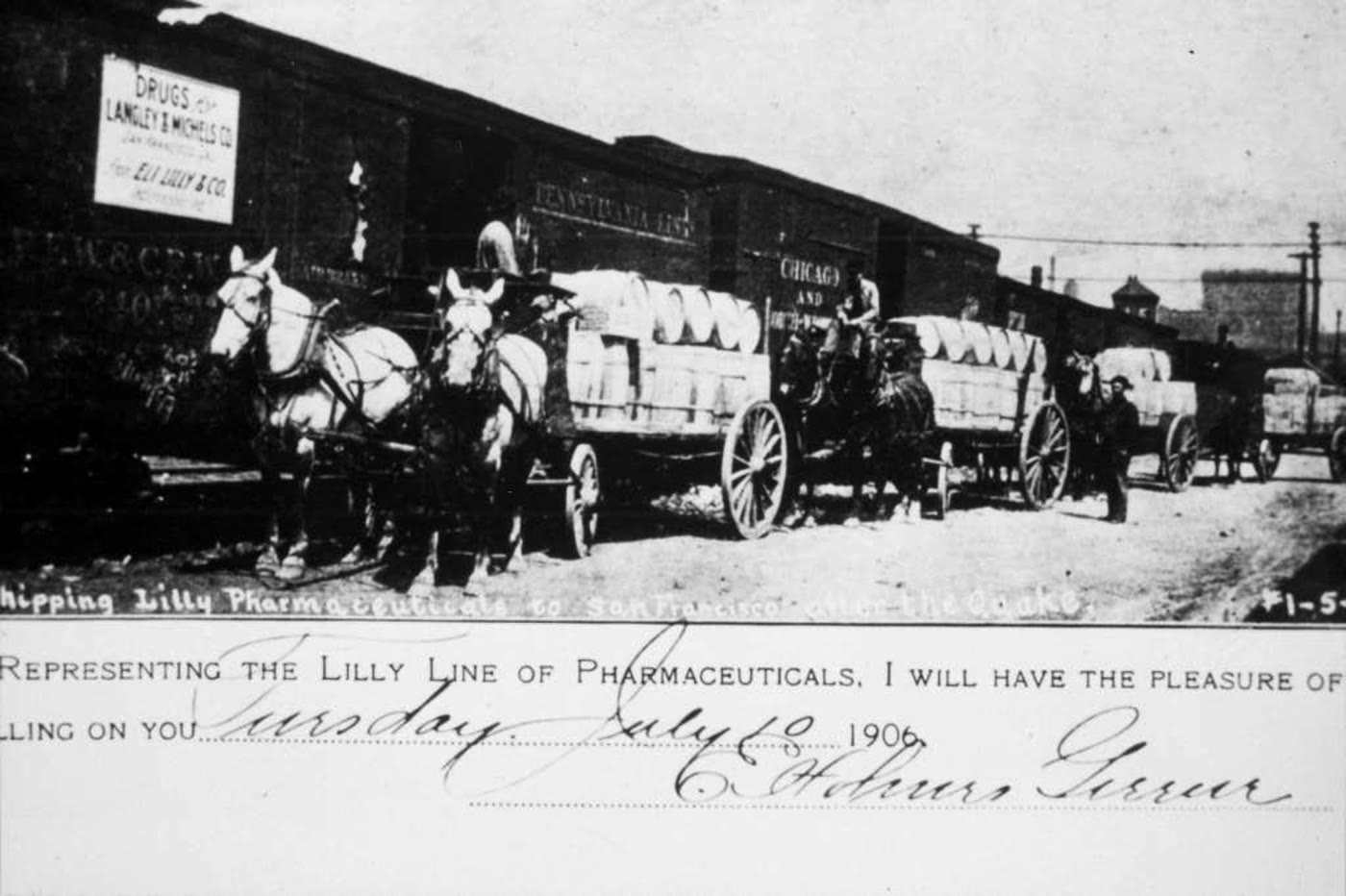
The Colonel's grandson, also named Eli Lilly, joined the company in 1907, straight from pharmacy school, and was made the head of a newly created "economic department" that consisted of himself. His job was to find waste. In his first year he designed a bottle-filling machine that handled bottles of different heights, installed pill-counting machines so that every bottle contained the same number of pills, replaced handwritten orders with typewritten ones, and saved the company $7,500. He started an internal newsletter whose recurring message was that a business is made up of little things.
Two years later he was running manufacturing. The company's most difficult and most profitable product was the gelatin capsule, which was made by hand, by intuition, in a process that produced capsules that stuck together or shattered, in a plant that shut down every summer because Indiana humidity made the gelatin unworkable. He installed instruments to measure the temperature and specific gravity of the gelatin solution where workers had previously guessed. He installed automatic machines, then fifty of them in a purpose-built plant, then air conditioning, which was then an unusual thing to put in a factory. By 1917 Scientific American was describing the world's largest capsule factory, in Indianapolis, capable of 2.5 million capsules a day, more than the company needed, with the surplus sold to competitors.
He had read Frederick Taylor's The Principles of Scientific Management when it came out in 1911, and later wrote that it had had more vital influence on the history of Eli Lilly and Company than any other book. What that meant in practice was a stopwatch on the factory floor, a standard of 8,568 capsules filled per worker per day, and a bonus for beating it. In the gelatin-coating department the time studies raised worker pay by 40 percent and output by 90 percent. He also introduced something that sounds trivial and was not: manufacturing tickets reproduced by blueprint, so that the formula for each product existed in identical copies in every department and no one ever retyped it. The idea was to design transcription error out of the system rather than rely on people not to make it.
The payoff came in February 1926, on the company's fiftieth anniversary, when it opened Building 22. Raw materials entered at one end; finished, bottled, packaged medicines came out the other; and in between, materials moved by conveyor, lift, pipe, and chute in as close to a straight line as the building allowed. A historian of the company has called it probably the most sophisticated production system in the American pharmaceutical industry. The grandson considered it, along with the stopwatches, the greatest achievement of his career.
None of this is a story about discovering anything. It is a story about a family that spent fifty years learning to make the same thing identically, a million times, and to know when it had not. That competence is what the company brought to the table in the winter of 1921, when it was offered the most important molecule of the twentieth century by people who could not make it.
The Clowes move
Before insulin, a child diagnosed with diabetes could expect to live about a year. The disease is the body's inability to move sugar from the blood into the cells that burn it; untreated, the sugar leaves in the urine and the patient starves while eating. The only treatment in 1921 was a starvation diet, on the theory that less fuel meant less sugar, which was correct as far as it went and left families choosing between two ways for a child to die.
In the summer of 1921, at the University of Toronto, a surgeon named Frederick Banting and a student named Charles Best, working in the laboratory of the physiologist J. J. R. Macleod, showed that an extract of pancreas injected into dogs whose own pancreases had been removed lowered their blood sugar and kept them alive. On December 30, 1921, Banting presented the work at the American Physiological Society's meeting in New Haven. The room was skeptical. One man in it was not.
George Clowes had been born in Ipswich, England, in 1877, had a doctorate in chemistry from Göttingen, had spent years studying cancer at a state institute in Buffalo, and had worked on mustard gas for the Chemical Warfare Service during the war. Lilly had hired him in 1919 as its first director of biochemical research, on the strength of his publications and his connections to academic science, and had, in effect, created a department around him. The elder Lilly wrote in early 1920 that Clowes would someday hit on some great thing that would make him famous and rich. At New Haven, Clowes approached the Toronto researchers after the talk and proposed that Lilly help them manufacture the extract. Toronto politely refused. A university had no wish to hand a discovery of this magnitude to a commercial drug firm in Indiana, and it had its own non-commercial laboratory, Connaught, to make the stuff.
What changed Toronto's mind was not persuasion. It was scale. On January 11, 1922, a fourteen-year-old named Leonard Thompson received the first injection of the extract at Toronto General Hospital; it was impure, caused an abscess, and did little. On January 23 he received a purified extract prepared by the biochemist James Collip, and his blood sugar fell from 520 to 120 milligrams per deciliter. By spring the results in patients were, by any standard in medicine, miraculous. But the extraction, an exacting alcohol process applied to fresh animal pancreas, could be done in a university lab at the scale of a few patients and could not be done at the scale of a disease. Connaught's capacity hit its ceiling. Clowes had kept writing. He met Macleod in Washington in early May, and on May 22 he and Eli Lilly, the grandson, arrived in Toronto and sat down with the discoverers at the King Edward Hotel. On May 30, 1922, they signed. Lilly received an exclusive license to make and sell insulin in the United States for a one-year experimental period, and both sides committed to share everything they learned.
The next eleven months are the founding of the modern pharmaceutical industry, and they were not a scientific problem. They were a manufacturing one. By mid-June Lilly was making small quantities. By August it was producing about 1,500 units a week and the grandson wrote to his father that they were sailing in for a finish. Then, in the autumn, the potency of the product collapsed. Batches that should have worked did not, and nobody knew why. The company's chief chemist, George Walden, solved it by working out that insulin could be precipitated cleanly at a particular acidity, its isoelectric point, and the process he developed, isoelectric precipitation, produced a purer and far more stable product than anything Toronto had managed. By the spring of 1923 the basic production problems were solved and Clowes was claiming, not entirely as a boast, that the company could supply the world. Lilly's insulin, sold as Iletin, reached the market in 1923. That year the company's profits exceeded 17 percent of sales, the best in its history, and roughly half the increase was one product. The company had a near-monopoly on American insulin until a second licensee entered in June 1924.
There was friction, and it recurs. Lilly wanted to sell under its own trade name, Iletin, distributed exclusively to selected physicians during the monopoly year, so that when competitors arrived they would be competing against a brand. Toronto's scientists, once they understood what a brand was for, objected, and pushed for the bottles to say simply "Insulin, Lilly." The compromise was both names on the label. Lilly also tried to patent Walden's process, which Toronto, having licensed its discovery on the understanding that the science would be shared, took badly. Banting and Macleod received the Nobel Prize in 1923 and split their shares with Best and Collip. Nobody in Stockholm mentioned the company that made the drug.
Strip out the personalities and what remains is a transaction with a shape. A university had a discontinuous piece of biology and no capacity to make it. An incumbent manufacturer had capacity and no biology. The manufacturer supplied scale, process chemistry, regulatory execution, and a market, and in exchange it got the category. The startup, if we can call Toronto that, got its discovery into the world and a royalty; the incumbent got a franchise that lasted a hundred years. That is the biotech licensing deal in its original form, and Lilly would run it again and again. The only real question in every repetition is who learns whose capability. In 1922 the answer was that Lilly learned biology, and Toronto learned that it needed Lilly.
There is one more fact from the 1920s that belongs here because it explains the next sixty years. The company had built dedicated biological manufacturing capacity, at a plant in Greenfield, Indiana, in 1913, nine years before anyone in Indianapolis had heard of insulin. When Clowes came back from Toronto, the company was not starting from zero. It had built the factory before it had a product for it. That pattern, capacity ahead of demonstrated demand, would repeat with penicillin, with the polio vaccine, with recombinant insulin, and with the drug that would eventually take the company to a trillion dollars.
Running the play again
The insulin deal set the company's character for the next sixty years, and the years are best understood as a series of occasions on which somebody else discovered something and Lilly made it.
Through the Depression it made money and kept its people. It followed a strict no-layoff policy from 1929 through the 1930s, assigning workers who were not needed for production to other jobs rather than dismissing them, and came out of the decade with more employees than it went in with; the grandson considered this among the things he was proudest of in his career. In 1937 the family set up the Lilly Endowment, a charitable foundation, and funded it with company stock. That looked like philanthropy. It would turn out to be a takeover defense, though nobody designed it as one, and its importance comes later in this story.
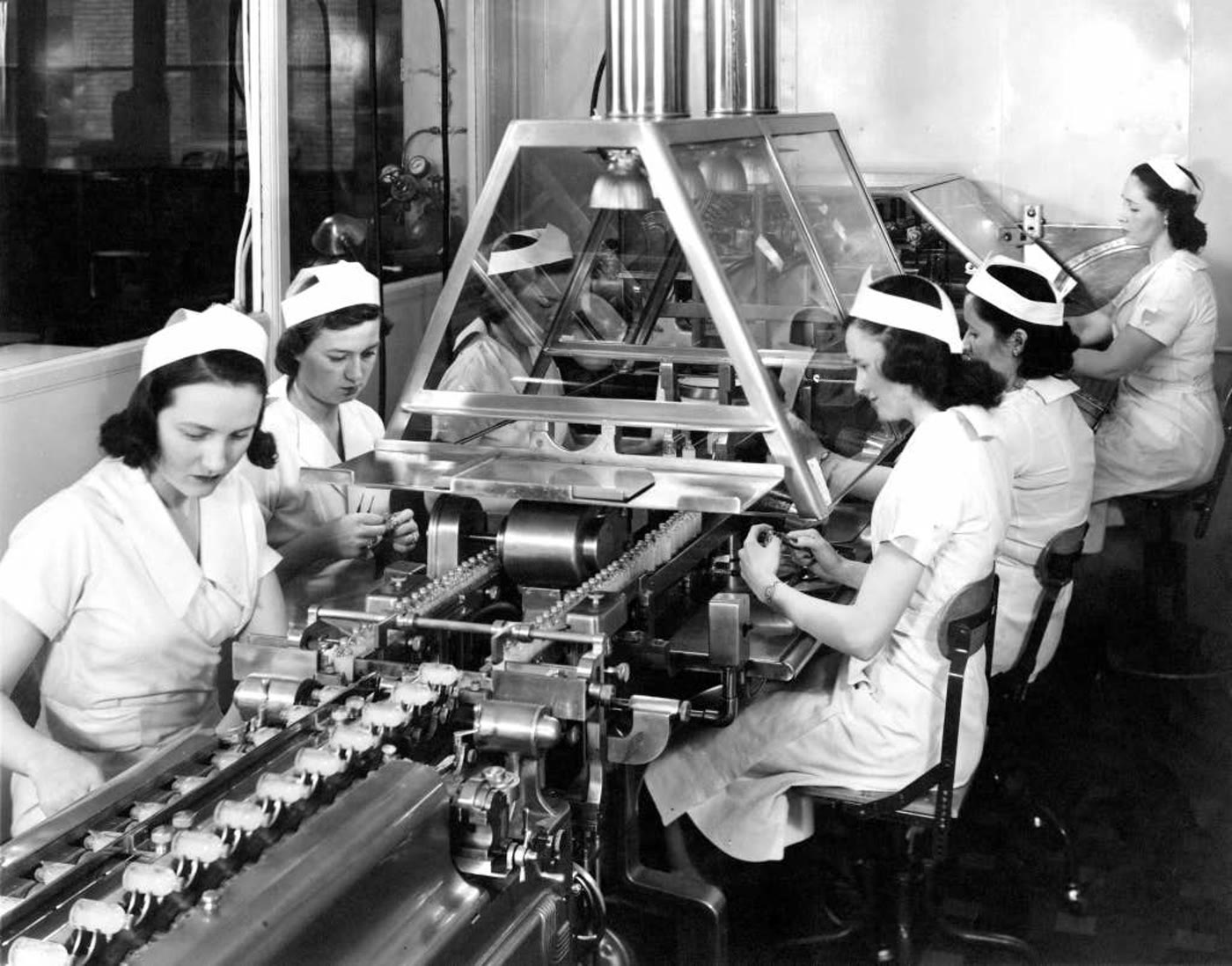
In the war the company made penicillin under the government's crash program, as one of the largest producers, and dried more than two million pints of blood plasma with the American Red Cross, about a fifth of the national total. It made typhus, influenza, and encephalitis vaccines, gas-gangrene antitoxin, and the seasickness pills carried onto the Normandy beaches. None of these were Lilly inventions; all were manufacturing problems solved at a scale the inventors could not have managed.
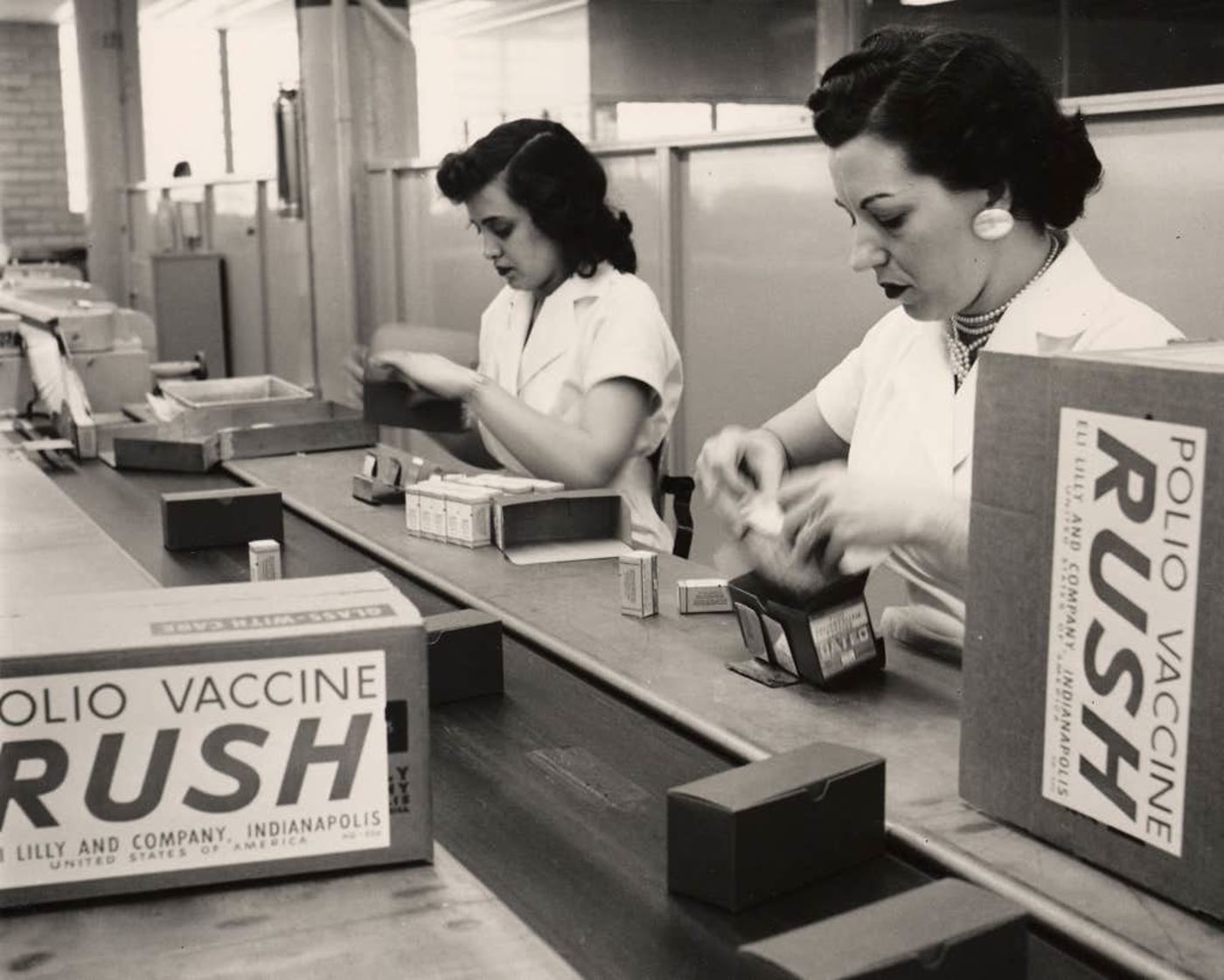
The polio vaccine is the purest case. When the National Foundation for Infantile Paralysis organized the 1954 field trial of Jonas Salk's killed-virus vaccine, the largest medical experiment in history to that point, with more than 600,000 children injected, it needed manufacturers who could make the vaccine to Salk's exacting inactivation process before anyone knew whether it worked. Lilly and Parke-Davis were the two companies that made the trial doses. Lilly built stockpile before the results were in, inventory that would have been worthless had the trial failed; its president at the time called participation a privilege, which is what you call a bet you cannot lose in reputation and might lose in money. On April 12, 1955, the results were announced at Ann Arbor, and the vaccine was licensed the same day. Within weeks came the disaster that defined the era, and it is important to say precisely whose disaster it was. Cutter Laboratories, one of the five licensed manufacturers, shipped vaccine that contained live poliovirus. Children who received it were paralyzed, and some died. Lilly's vaccine was clean. In a story about manufacturing as the real competence, there is no stronger evidence than a public-health catastrophe caused by a competitor that could not do what Lilly could, with the same recipe.
The 1950s also produced the company's first real in-house discoveries, and they came out of dirt. Lilly ran a program that screened soil samples from around the world for organisms that produced antibiotics, on the reasoning that the actinomycetes that make such compounds are everywhere in soil and decaying vegetation and that the more samples you screened, the more you would find. A soil sample from the Philippines yielded erythromycin in 1952, the first of the macrolide class, and the company's new plant in Lafayette, Indiana, was turned over to making it. A sample collected in Borneo in 1952 by a missionary yielded an organism whose product the company's chemists isolated in 1953 and named vancomycin, from "vanquish," because it killed penicillin-resistant staphylococci. Vancomycin was approved in 1958 and spent the next four decades as the drug of last resort against resistant staph infections. Then came the cephalosporins, a class of antibiotics licensed from Oxford, which Lilly turned into a franchise: cephalothin in 1964, the first in the United States, then cephalexin in 1971, cefazolin in 1973, and cefaclor in 1979, which became one of the best-selling oral antibiotics in the world and was the company's cash engine until the late 1980s.
All of that made Lilly a large, profitable, Midwestern manufacturer of anti-infectives and insulin, publicly traded since 1952 and run since 1953 by professional managers rather than the family. And then, as its patents expired through the 1960s and 1970s, it did what nearly every large drug company of the era did, which was to forget what it was.
In 1971 Lilly bought Elizabeth Arden, the cosmetics house, for $38 million. Arden lost money for five years, then recovered, and by 1982 its profits were near $30 million; Lilly sold it to Fabergé in 1987 for $657 million. Financially, this was the best deal in the company's conglomerate period. Strategically it was a pharmaceutical company running a lipstick business. Between 1977 and 1992 it assembled a serious medical-device operation, buying pacemaker, defibrillator, infusion-pump, and catheter companies and, for $350 million, the diagnostics firm Hybritech. In 1994 it paid about $4 billion for PCS Health Systems, the largest pharmacy-benefit manager in the country, on the theory that a drug maker should own the intermediary that decided which drugs got paid for. Almost all of it was unwound within a decade. The device businesses were separated in 1994 and became Guidant; Hybritech went to Beckman for a fraction of its price; PCS was sold to Rite Aid in 1998 for about $1.5 billion, a loss of roughly $2.5 billion on a single decision. The detour is a useful control group. When Lilly did things that were not making medicines at scale, it did them badly.
But in the middle of the detour, in 1978, it ran the Clowes play for the second time, and the second time is the one that made modern biotechnology into a business.
Genentech was two years old, had fewer than fifty employees, and had just made human insulin in bacteria, a year after proving the technique on a smaller hormone: the gene for the human protein, inserted into a bacterium, and the bacterium made the protein. Lilly was by then the largest insulin maker in the world, and it had a problem it could see coming. Its insulin came from the pancreases of cattle and pigs collected at slaughterhouses; the supply of animals was roughly constant and the number of diabetics was not. Animal insulin also caused immune reactions in some patients, because pork insulin differs from human insulin by one amino acid and beef insulin by three. Lilly's own scientists had been working on purified animal insulins and on the chemistry of taking insulin's two chains apart and putting them back together.
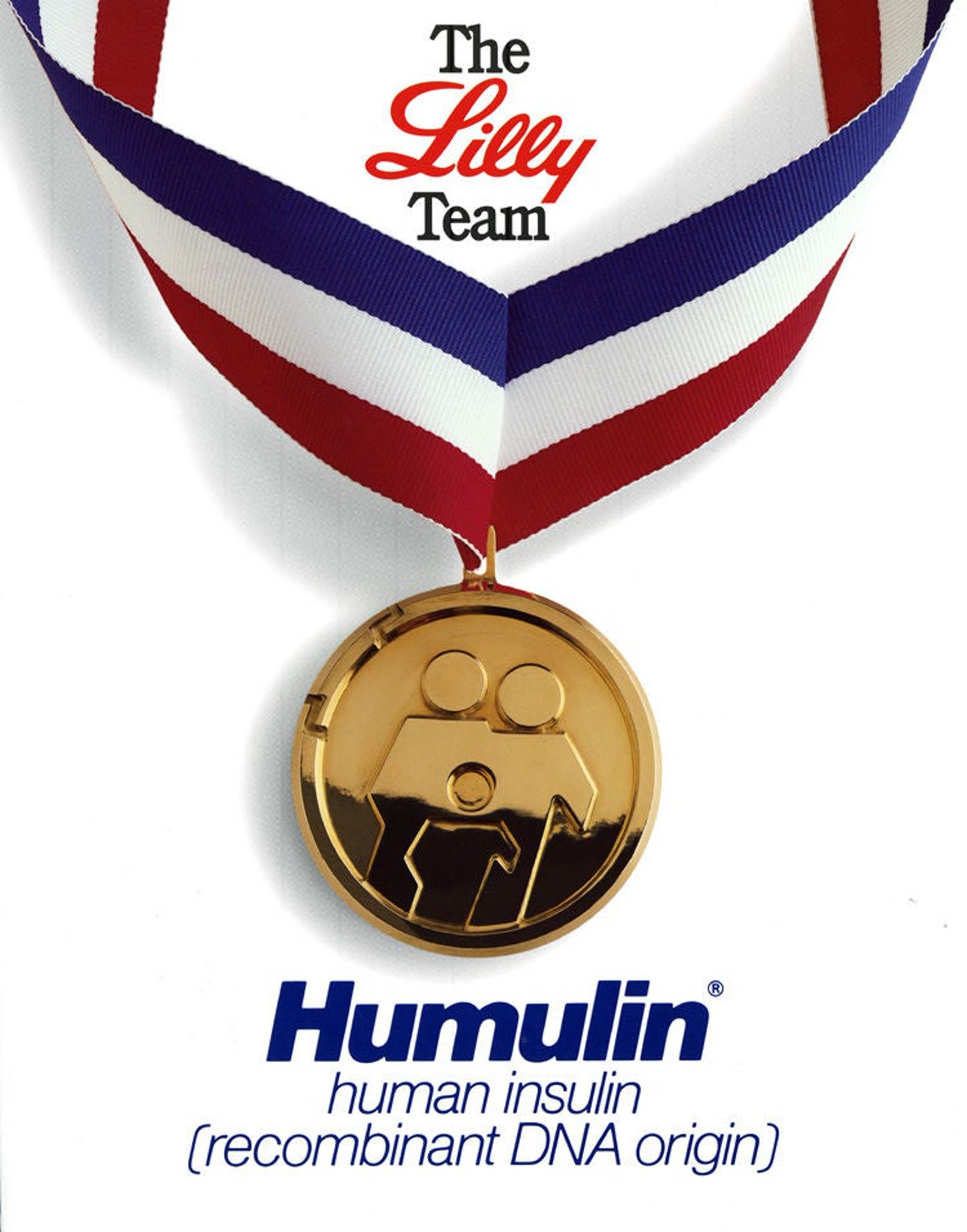
What Genentech delivered to Indianapolis was, according to the Lilly scientists who received it, two strains of bacteria, one that made insulin's A chain and one that made its B chain, and a great deal of uncertainty about what to do with them. The bacteria made each chain fused to another protein, inside the cell; the chains had to be fermented separately, extracted, cleaved from their carrier with cyanogen bromide, purified, combined by chemistry into the two-chain insulin molecule, purified again, and crystallized. A company with fifty people had no development or manufacturing capability to do any of that. Lilly did. It built the fermentation and purification capacity, in Indianapolis and at its plant in Liverpool, before it had approval to sell what the plants would make. On October 28, 1982, the FDA approved Humulin, human insulin made by recombinant DNA, the first medicine made that way to reach the market anywhere, after a review of about five months.
The shape of the deal is worth stating because it is now the template for almost every platform company in biology. The startup created a discontinuous technology; the incumbent supplied the development machinery, the manufacturing, the regulatory execution, and the market; the startup got a royalty and its name in the history books; the incumbent got the category. The question, again, is who learned whose capability. Genentech went on to become a great company, and was eventually acquired by Roche. Lilly kept insulin. It has kept it for a hundred and three years, through animal insulin and human insulin and the fast-acting analogue Humalog in 1996 and, as of last week, a once-weekly basal insulin called Onswik, approved on September 24, 2026. The franchise that Clowes brought back from Toronto is still on the market, and the reason is not that Lilly discovered insulin. It is that every time the science of insulin changed hands, Lilly was the one who could make the new version.
That is the whole of Lilly's first century in one sentence, and it makes the second century strange. Because in 1987 the company would, for the first time, put a molecule from its own laboratory on the market, and that molecule would make it the most famous drug company in the world, and it would nearly destroy it.
Explore the medicines of the 1980sA molecule looking for a disease
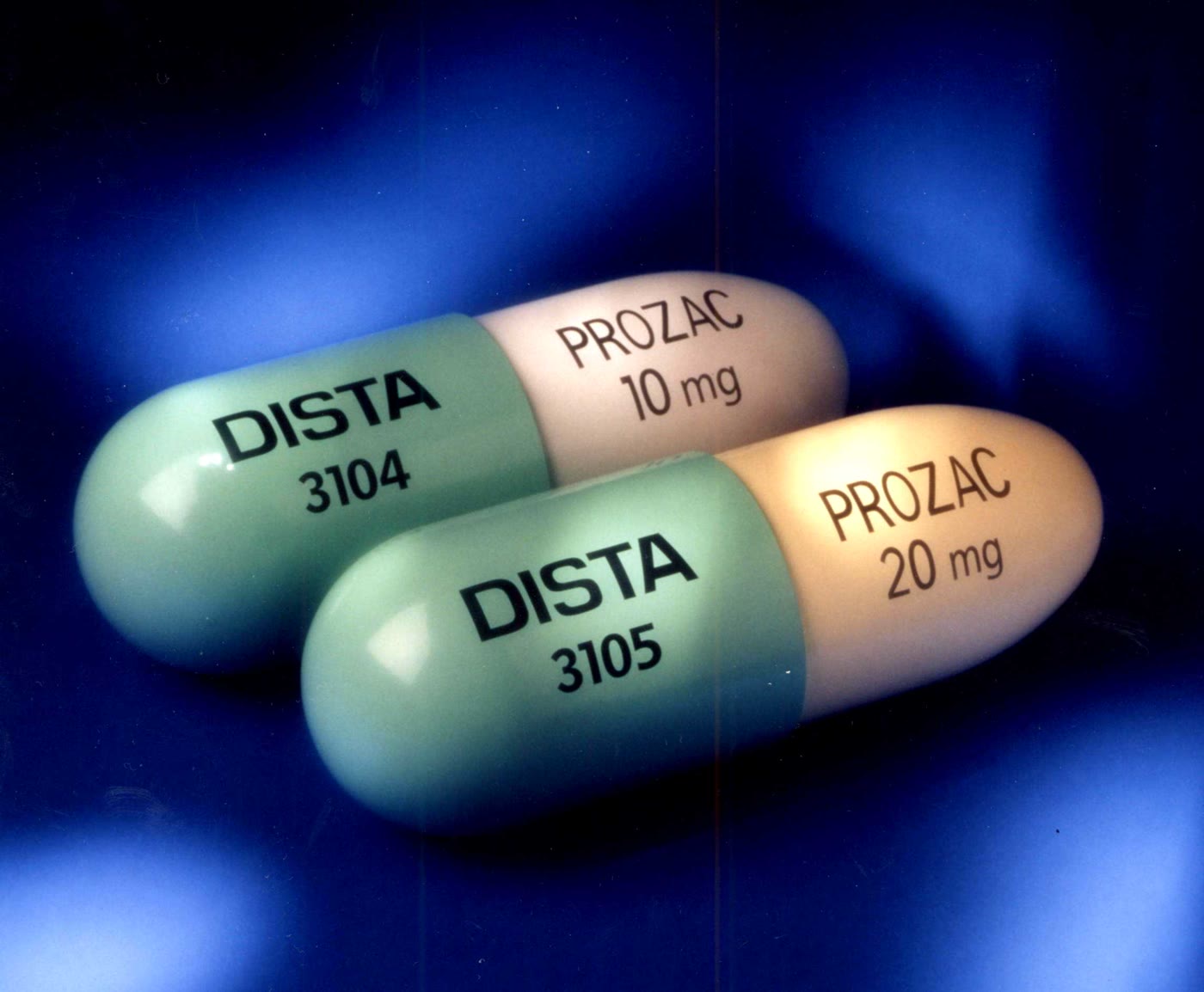
To understand what Prozac did, you have to understand what treating depression looked like in 1970, and the first thing to understand is that almost nobody was doing it.
The antidepressant era began in 1957, with two discoveries made by accident within months of each other. A Swiss psychiatrist testing a chlorpromazine relative in a rural hospital found it did nothing for schizophrenia and lifted the mood of the depressed patients who received it; that compound, imipramine, became the first tricyclic antidepressant. A tuberculosis drug being trialed in a New York sanatorium made patients energetic and sociable, dancing in the corridors with holes in their lungs; a derivative, iproniazid, became the first monoamine-oxidase inhibitor. The two companies that owned these drugs both concluded there was no market, because depression was understood as a rare disease of hospitalized patients. In 1970, the American antidepressant market was about $300 million.
The drugs themselves helped keep it that way. The tricyclics work, but they act on at least four different receptor systems in the brain at once, and the unwanted three produce dry mouth, constipation, blurred vision, sedation, dizziness on standing, and weight gain. More seriously, a tricyclic overdose is lethal by heart arrhythmia, which meant that the standard treatment for a disease whose defining risk is suicide was itself a reliable means of suicide, and a two-week prescription was a dangerous object to hand a patient. Dosing had to be adjusted carefully, over weeks, with monitoring. These were specialists' drugs, and there were not many specialists.
Lilly had a tricyclic of its own, nortriptyline, approved in November 1964, and a small psychiatric franchise. In the late 1960s an organic chemist at the company named Bryan Molloy, a Scot who had come to America to study the neurotransmitter acetylcholine, set out to make an antidepressant that hit one target instead of four, and he started from a strange place: diphenhydramine, the allergy pill sold as Benadryl. Two things made this less strange than it sounds. The tricyclics had been built out of antihistamine chemistry and are close cousins of allergy drugs; and diphenhydramine was already known to block, slightly, the reuptake of the neurotransmitter noradrenaline, which was the mechanism everybody then believed antidepressants worked by. Molloy reshaped the molecule one change at a time, and a colleague tested each version in mice.
The decisive contribution came from someone not on his team. David Wong, a biochemist who had joined Lilly from Hong Kong in 1968, was interested in serotonin, which in 1970 was a minority hypothesis. Beginning in 1971 he ran Molloy's compounds through an assay that measured how well each one blocked the reuptake of serotonin into nerve endings, as distinct from noradrenaline. In 1972 one compound stood out. It was almost identical to Molloy's best noradrenaline compound; the difference was one substituent on one ring, moved to the opposite side and swapped for a trifluoromethyl group, and that change flipped the molecule from one transmitter to the other. The compound was more than a hundred times more selective for serotonin than for noradrenaline. Its Lilly number was 110140. A pharmacologist named Ray Fuller then showed that it did in living rats what it did in the test tube. The company published it in 1974 as a selective serotonin uptake inhibitor, and fluoxetine, as it was named, became the first compound in history designed to be one.
It then spent thirteen years nearly dying. It failed the standard animal screens for antidepressant activity, which had been calibrated on the tricyclics. Lilly's own market research, in 1975, described the antidepressant market as satisfied, with no unmet need, and there were senior people who saw no reason to spend money on a drug for a $300 million market that already had a dozen entrants. What kept the program alive was a small number of senior scientists who could not prove they were right and refused to kill it. The first human study was in 1976. The application went to the FDA in 1983 in more than a hundred binders. By then a Swedish company, Astra, had launched a similar drug, zimelidine, in Europe, and Lilly's team assumed the race was lost; then zimelidine was withdrawn, in 1983, after cases of Guillain-Barré syndrome, a nerve disorder. An FDA advisory committee voted unanimously for fluoxetine in 1985. Approval came on December 29, 1987. The scientists who had made it learned the news from local television; the laboratories were shut for Christmas.
Prozac went on sale in January 1988. To understand what it did to the market, look at what changed and what did not. Fluoxetine is not more effective than the tricyclics; in head-to-head trials it is about as effective. What changed was everything around the efficacy. One capsule, 20 milligrams, once a day, with no dose adjustment. No fainting warning, no dry mouth, no weight gain in most patients. And, critically, a patient could swallow a whole bottle and almost certainly live. A drug with that profile did not need a psychiatrist. It could be prescribed by a family doctor in a fifteen-minute appointment, and family doctors see far more sad people than psychiatrists do.
Lilly did not find more depressed people. It found more doctors. The size of the depression market had been defined by who could safely write the prescription, and Prozac changed who that was. The company also understood, or learned, that the disease needed to be made visible: it funded the National Institute of Mental Health's public campaign on recognizing and treating depression, printing eight million brochures and 200,000 posters, and the head of the institute said at the time that such materials could do great good and could also be self-serving. Both were true. The diagnostic manual had, in 1980, collapsed the many older categories of depressive illness into one, major depressive disorder, which made it a single thing a family doctor could diagnose. In 1970 depression was a rare hospital disease. By the late 1990s the majority of antidepressant prescriptions in the United States were being written outside psychiatry. The molecule was not the reason. The prescriber was.
Prozac sold about $350 million in its first full year, passed a billion dollars a year in the early 1990s, and peaked at $2.8 billion in 1998. Somewhere on the order of $22 billion of cumulative sales and forty million patients came out of a compound the company had nearly cancelled. It made Lilly, a company that had never meant to be in psychiatry, the most famous name in it. Newsweek put the green-and-cream capsule on its cover in March 1990. A psychiatrist's book in 1993, Listening to Prozac, argued that the drug made some patients not just well but better than well, and the argument shifted from whether the drug treated depression to whether it changed who you were. Nobody in Indianapolis designed any of that. In inventing a customer, Lilly had also invented a cultural object, and it did not have the institutional temperament for either.
The cost arrived in Louisville. In September 1989 a former pressman who had been on Prozac for about a month walked into the printing plant where he had worked with an AK-47, killed eight people, wounded twelve, and killed himself. Five months later three clinicians at a Harvard teaching hospital published a report of six depressed patients who had developed intense, violent suicidal thoughts within weeks of starting the drug, none of whom had reacted that way to any other. A case report of six patients is not evidence of causation; depression produces suicidal thinking on its own. It was also six experienced doctors saying they had never seen this before. An FDA advisory committee concluded in September 1991 that there was no credible evidence of a causal link, which is not the same as evidence of no link, and roughly 160 lawsuits followed.
The first to reach a jury was in Louisville, in the autumn of 1994, over the printing-plant shooting. It lasted forty-seven days and the jury found for Lilly, nine to three. The company ran a national campaign announcing that Prozac had been proven safe in a court of law. What it did not announce was what the trial judge later established: that during a one-day recess near the end of the trial, after he had ruled that the plaintiffs could tell the jury about a prior Lilly conviction over a different drug, the two sides had agreed that Lilly would pay the plaintiffs a fixed sum regardless of the verdict, that neither side would appeal, and that the deal would stay secret. The plaintiffs' lawyer had then closed his case without using the evidence he had fought for weeks to admit. The judge asked both sides, off the record, whether they had settled; they said no. It took him two years and the Kentucky Supreme Court, which found a serious lack of candor and possibly fraud, to have the verdict changed on the record to "dismissed as settled." Lilly maintained to the end that it was not a settlement.
The prior conviction was over Oraflex, an arthritis drug Lilly had launched in April 1982 with an unusually aggressive campaign and withdrawn in August after deaths from liver and kidney failure in elderly patients; in 1985 the company pleaded guilty to twenty-five misdemeanor counts of failing to report adverse events to the FDA. That is the hinge of the whole psychiatric era, and it should be said plainly. In six years, Lilly had built two things it had never possessed. A customer, the family doctor, who made it the biggest name in psychiatry. And a reputation to defend, which it defended the way companies do, with publicity and lawyers, and in this instance with a deal hidden from a judge. Both would be the company for the next twenty years.
There was one more thing Prozac taught the company, and it was the most expensive lesson of all. In 1984 Congress had created the modern generic-drug industry: a copy no longer needed its own trials if it could prove it was the same molecule, and a generic company that challenged a brand's patents before they expired, and won, got six months as the only generic on the market. That was a bounty on weak patents, and it made patent litigation a business. In March 1996 a company called Barr, run by a litigator, told Lilly it had filed for generic Prozac and that both of Lilly's patents were invalid. Lilly won the first round in January 1999, and Barr took $4 million to drop most of its claims and appeal the rest; four million dollars was about fourteen hours of Prozac sales. Lilly looked safe until December 2003, when the later of its two patents expired. On August 8, 2000, its stock closed at an all-time high of $108.
On August 9 the Federal Circuit ruled. It upheld the patent on the molecule, which expired in February 2001. It threw out the 2003 patent, on the grounds that Lilly had in effect patented the same invention twice. Generic Prozac could launch in August 2001. Twenty-eight months of exclusivity disappeared in an afternoon. The stock fell 29 percent by the close, about $35 billion of market value in a single session; Barr's rose 68 percent. Lilly later told the Supreme Court the ruling would cost it about $4 billion in sales. The market had taken off nine times that, and the reason is that investors were not pricing lost Prozac. They were repricing what it meant to depend on one product, and the odds that any blockbuster could be taken down by a generic company with a good lawyer. Forest, which sold Celexa, fell 21 percent the same day.
Generic fluoxetine shipped on August 2, 2001. Within two months Lilly's chief executive was telling reporters that the erosion in prescriptions was the worst ever seen for a blockbuster. In the fourth quarter of 2001, U.S. Prozac sales were down 84 percent on the year before. The industry's rule of thumb had been that a brand lost 80 percent of its volume in two years after generics. It took five months. If a reader takes one number from this essay into a valuation model, it should be that one.
The diabetes company's best-selling drug
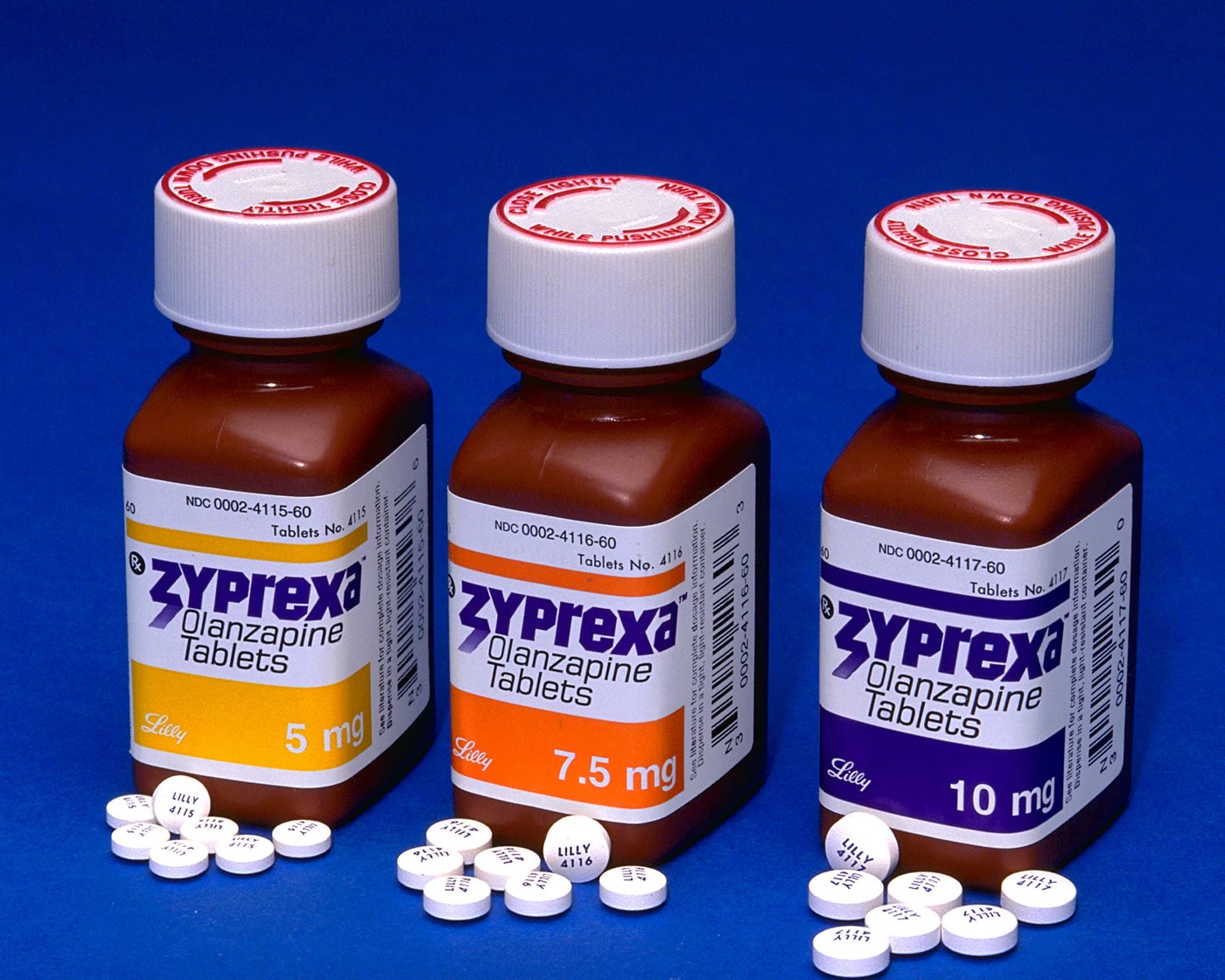
What caught Lilly when Prozac fell was a molecule that had been sitting in a drawer since 1982, and the story of how it got there is the story of how the company applied the Prozac lesson to a drug it should not have applied it to.
Schizophrenia affects about one person in a hundred, and the drugs for it since the 1950s, chlorpromazine and its descendants, control the hallucinations and delusions at the cost of movement disorders: stiffness, tremor, restlessness, and in long-term use involuntary movements that can be permanent. A drug called clozapine, made in 1959, worked in patients nothing else helped and barely touched movement, but about one patient in a hundred lost their white blood cells on it, sometimes fatally, so it required a weekly blood test and was approved in the United States only in 1990 and only for patients who had failed everything else. The brief for every drug company in the world was written by that molecule: keep what clozapine does, lose the blood problem.
Chemists at Lilly's research center in Surrey, England, took clozapine's structure and started changing it. Their first candidate went into patients and the trial was stopped after seventeen of them because liver enzymes shot up. Two more candidates failed in dogs. In 1982 they made a compound that kept clozapine's shape and swapped one ring for another, and called it olanzapine. This was five years before Prozac was approved. Nobody in Surrey was thinking about a patent cliff in Indianapolis; they were trying to fix clozapine. It reached patients fourteen years after it was made. The FDA approved it as Zyprexa on September 30, 1996, and that year's annual report recorded something that would have been unthinkable in 1970: drugs for the brain were now Lilly's largest-selling product group. The company that never meant to be in psychiatry was now mostly psychiatry.
The word attached to these drugs was atypical, and it is worth being precise about what it means, because it is a marketing word as much as a medical one. Atypical means antipsychotic minus the movement disorders. It says nothing about whether the drug treats the illness better, and nothing about what side effects it has instead. The first Zyprexa label, in 1996, listed diabetes and high blood sugar among the infrequent side effects, one line in a table.
Now do the arithmetic that any sales director would have done. Schizophrenia is one in a hundred, bipolar disorder a bit more, and those patients are treated by psychiatrists, of whom there are not many. Sold only to those doctors for those patients, Zyprexa had a ceiling. And the company had just spent a decade learning how to get past a ceiling: sell past the specialist. Prosecutors later alleged that in 1999 Lilly's nursing-home sales force worked from a slogan, five at five, meaning five milligrams at five o'clock, so the resident sleeps through the night, for a drug approved for schizophrenia. In late 2000, at a meeting in Orlando, the company launched a campaign called Viva Zyprexa aimed at primary-care doctors, who do not treat schizophrenia, and trained its representatives on a patient profile named Martha: a widow, children grown, living alone, agitated, not sleeping, with no paranoia and no mania. Martha did not have a diagnosis Zyprexa was approved for. One of Lilly's own advisers said the profile read as dementia.
While the sales force was doing that, this is what the company's scientists were writing. In November 1999 an internal review of seventy trials found that 16 percent of patients on Zyprexa for a year had gained more than sixty-six pounds. In February 2000 a memo to senior scientists reported that patients on the drug were three and a half times as likely as patients on placebo to develop high blood sugar. During 2000 the diabetes specialists Lilly had retained as advisers warned the company, and a manager wrote that unless it came clean the problem could get much more serious. Doctors were told, until at least the end of 2001, that the risk was only slightly raised. The insulin company's largest product raised blood sugar, and the insulin company's own diabetes advisers were the ones saying so.
The reckoning came in three stages and it is worth separating them, because they are three different kinds of evidence. The first was a trial nobody was required to run. In September 2005 the results of CATIE were published, a study funded by the National Institute of Mental Health rather than any drug company, in which 1,493 patients with schizophrenia were randomized to olanzapine, three other atypicals, or perphenazine, a cheap drug from the 1950s, and followed for eighteen months with one blunt primary endpoint: how long they stayed on the drug they were given. Olanzapine did best; 64 percent of patients on it stopped within eighteen months, against 74 to 82 percent on the others. It also caused the most weight gain, about two pounds a month, and the worst effects on blood sugar and lipids. And the 1950s drug did about as well as three of the four new ones. The point to take from CATIE is not that Zyprexa did not work. It is that approval only requires beating a placebo, and that nine years into the atypical era, the first serious head-to-head comparison had to come from the government.
The second stage was the litigation. In June 2005 Lilly settled about 8,000 patient claims for $690 million. In December 2006 the New York Times published a series based on internal documents, the weight review, the blood-sugar memo, the advisers' warning, Viva Zyprexa, Martha, which had reached the paper by a route a federal judge later found to be unlawful, through an expert witness under a court secrecy order and a lawyer in Alaska who used an unrelated case to subpoena them. Both facts stand: the documents were real, and the route was improper. Within two weeks Lilly settled 18,000 more claims for up to $500 million, bringing the total to $1.2 billion for 28,500 people, at a time when Zyprexa was earning $4.2 billion a year, so about three and a half months of sales.
The third stage was criminal. On January 15, 2009, Lilly pleaded guilty to promoting Zyprexa for uses the FDA had not approved and agreed to pay $1.415 billion, of which $515 million was a criminal fine, at that moment the largest ever imposed on a single company in a U.S. prosecution of any kind. The case had been brought by four whistleblowers, all former Lilly sales representatives. Be exact about what was admitted. Prosecutors alleged four years of off-label promotion, 1999 to 2003, for dementia, agitation, depression, and sleep. Lilly admitted eighteen months, September 1999 to March 2001, and one use, dementia in the elderly. It admitted nothing in the civil case.
The victim, in law, was not the patient. The theory of the case was that promoting the drug for unapproved uses caused false claims to be submitted to Medicaid, the military's health plan, and the federal employees' plan. The customer was the taxpayer. And nobody in the chain felt the price: the patient did not pay, the doctor did not pay, a state budget paid a year later across millions of claims. When the person who chooses a drug and the person who pays for it never meet, the only brake on demand is the label, and the plea says the label was ignored. Lilly's record lasted eight months. In September 2009 Pfizer paid $2.3 billion, partly over an antipsychotic. Over the next four years AstraZeneca paid $520 million over Seroquel, GlaxoSmithKline $3 billion, and Johnson & Johnson $2.2 billion over Risperdal, promoted to the elderly and to children. Same class of drug, same payer, same pattern.
Add it up. Between 2005 and 2009 Zyprexa cost Lilly about $2.6 billion in settlements and fines, before a single generic had shipped. On the income statement, the revenue looked identical whether or not the practices behind it were defensible. That is the lesson for investors, and it is not a comfortable one: revenue that depends on practices a company cannot defend is not revenue, and you cannot see the difference in the numbers until the plea. And there is a second lesson, which is the one Part I of this essay set up. The founding rule of Eli Lilly and Company, in 1876, was to sell only to physicians and never to the public. Prozac inverted it, by making the family doctor the customer and the patient the one asking by name. Zyprexa took the inversion one step further, to a drug that raised blood sugar and a customer who never saw the bill. The founding rule and the two catastrophes are the same story, told forwards and then backwards.
Explore the medicines of the 1990sThe merger Lilly didn't do
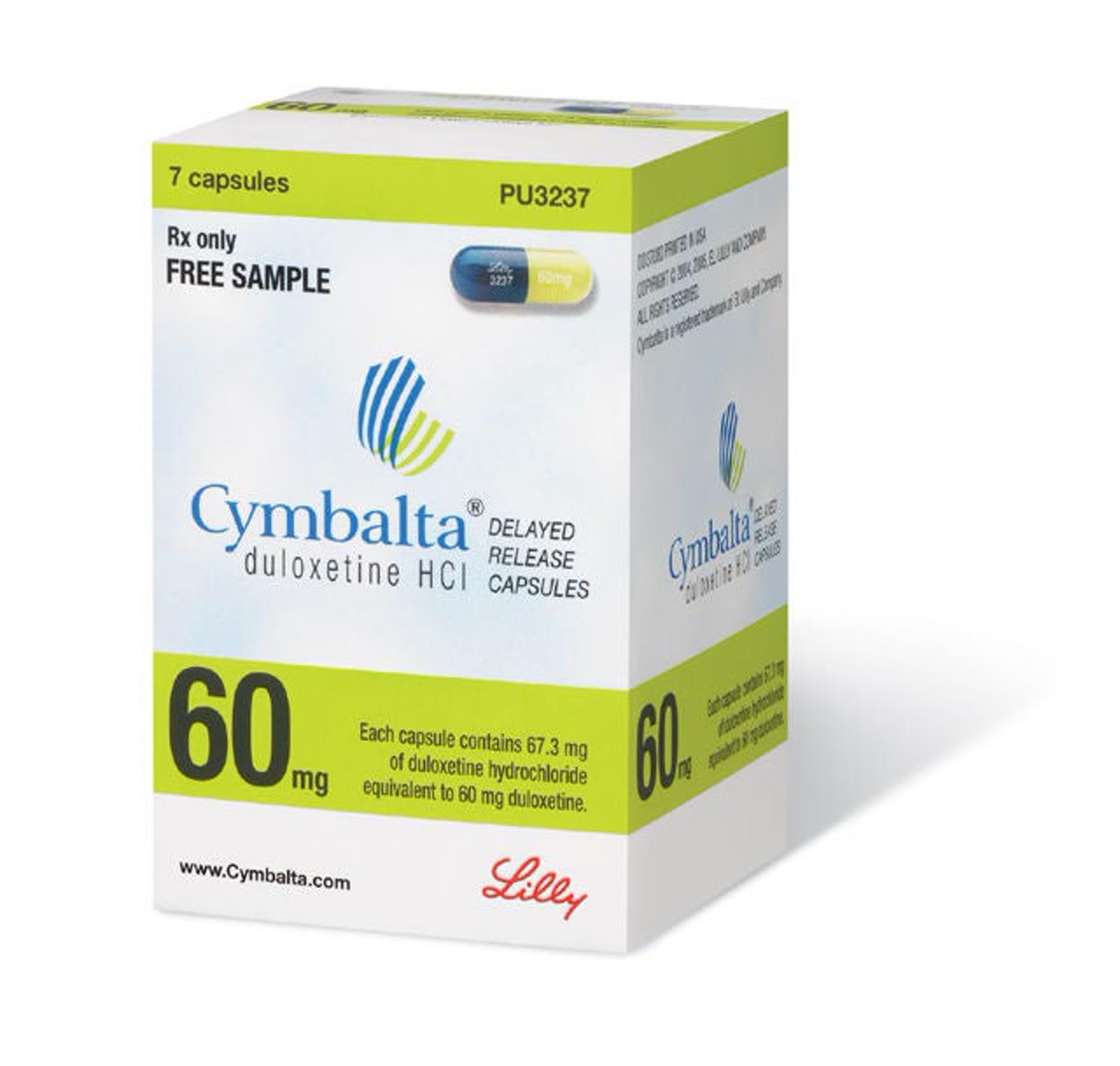
By the time it pleaded guilty, Lilly could see the rest of the decade coming, and the view was bad. Zyprexa would lose U.S. exclusivity in October 2011. Cymbalta, the antidepressant the company had built as Prozac's successor and which by then out-sold Prozac at its peak, would go in December 2013. Evista, the osteoporosis drug, in March 2014. Three products, more than a third of revenue, gone in thirty months, on dates printed in the annual report.
Every large drug company in the world faced a version of this cliff at the same time, because the whole industry's blockbusters had been launched in the same window in the 1990s, and the industry's answer was to merge. Pfizer bought Wyeth for $68 billion in 2009. Merck bought Schering-Plough for $41 billion the same year. The logic was arithmetic: two companies with cliffs, combined, could cut enough overlapping cost to make the combined cliff survivable, and the acquirer could add the target's late-stage pipeline to its own. It was the defensive mega-merger, and analysts expected Lilly to do one.
The man who had to decide was an organic chemist. John Lechleiter had joined Lilly in 1979, straight from a postdoc, and had become chief executive in April 2008. That autumn the stock touched $29; it had been $108 the day before the Prozac ruling. In October 2008 he spent about $6.5 billion on ImClone, the maker of the cancer antibody Erbitux, and said out loud that he was buying it because of the patent expirations he could see coming. And then he declined to do the big one. His argument was that a mega-merger destroyed the thing that would eventually save the company, which was the research organization, in exchange for a few years of cost synergies, and that Lilly's pipeline was better than the market thought. In September 2009 the company announced it would cut 5,500 jobs, about a seventh of its workforce, and reorganize around therapeutic areas. Revenue fell from $24.3 billion in 2011 to $19.6 billion in 2014. The company got smaller, and poorer, and stayed independent.
It was not obviously right. The pipeline Lechleiter was defending produced, in those years, two of the most expensive failures in the history of Alzheimer's research. Semagacestat, a drug designed to block the enzyme that produces the amyloid protein found in Alzheimer's plaques, was halted in Phase 3 in August 2010 when an interim analysis showed patients on it were declining faster in cognition and daily function than patients on placebo, and developing more skin cancers. Solanezumab, an antibody meant to clear amyloid from the blood, missed its primary endpoints in two Phase 3 trials in 2012 and, after Lilly ran a third trial focused on milder patients, missed again in 2016. The company had bet on the amyloid hypothesis earlier and harder than anyone, and for a decade the bet returned nothing.
But the same research organization produced, in September 2014, a drug called dulaglutide, sold as Trulicity, a once-weekly injection for type 2 diabetes that mimicked a gut hormone called GLP-1, and it was the first drug of its class that Lilly's own laboratories had made. To understand why that mattered you need to know where the class came from, and it came from a lizard.
There was a structural reason Lilly could decline the merger, and it is the one the Endowment was built for without anyone intending it. Because the Lilly Endowment held a large block of the company's stock, and still holds 9.8 percent, a hostile acquisition of Lilly was never practical. Every large pharmaceutical company that could be bought in the two great merger waves, in the late 1990s and the late 2000s, was bought: Warner-Lambert, Pharmacia, Aventis, Wyeth, Schering-Plough, Genentech, Wellcome. The two that could not be bought, because a foundation held the votes, were Lilly and Novo Nordisk, and they are the two companies that now own the most valuable drug class in the world. That is not a proof. Foundation ownership has also protected plenty of companies from the discipline of a market that would have been right to punish them, and two data points do not make a law. But it is at minimum a striking coincidence that both survivors of the 1923 scramble to make insulin share a structure that made them impossible to buy, and that both used the time it bought them to keep working on hormones.
Explore the medicines of the 2000sThe Gila monster, and the molecule that broke the pattern
In 1992 an endocrinologist at a Veterans Affairs hospital in the Bronx, working on the venom of the Gila monster, a lizard from the American Southwest that eats a few large meals a year, isolated a peptide he called exendin-4. It closely resembled a human gut hormone, GLP-1, which is released after a meal and tells the pancreas to make insulin, tells the stomach to empty more slowly, and tells the brain the body is full. Human GLP-1 is destroyed in the blood within minutes. The lizard version lasted hours. A San Diego biotech, Amylin, licensed it, and in September 2002 Lilly partnered with Amylin to develop it, in the deal shape Clowes had established eighty years earlier: the small company had the biology, the large one had the development machine and the diabetes sales force. The FDA approved exenatide as Byetta in April 2005, the first GLP-1 receptor agonist, a twice-daily injection for type 2 diabetes. Patients on it lost a little weight, which was noticed and not, at first, pursued.
Two things happened next that put Lilly, for once, behind. Novo Nordisk, the Danish insulin company that had been Lilly's rival since the 1920s, built its own GLP-1 with a fatty-acid chain attached, which bound to a blood protein and stretched the hormone's life from minutes to a day. Liraglutide was approved in 2010. A second-generation version, semaglutide, lasted a week and was approved as Ozempic in December 2017 and, for obesity, as Wegovy in June 2021, on the strength of a trial in which patients lost about 15 percent of their body weight over sixty-eight weeks. And Lilly's partnership with Amylin, which had produced Byetta and a once-weekly successor, broke up in 2011 in litigation. Lilly went into the 2010s with a follow-on molecule, Trulicity, and a rival that had built the category.
What Lilly did next is the reason this essay exists. Its scientists went back to a hormone the field had written off. GIP, the other gut hormone released after eating, had been discovered in the early 1970s and was known to stimulate insulin in healthy people. But in a study published in 1993, when GIP and GLP-1 were each infused into patients with type 2 diabetes, GLP-1 still drove insulin secretion and GIP's effect was largely lost. The conclusion the field drew was that GIP was useless in the disease that mattered, and nearly every company dropped it. Lilly's chemists did not, and the reasoning was that the 1993 finding said nothing about what GIP might do in combination, or on weight, or in patients whose blood sugar had already been brought down by a GLP-1.
The molecule they built, reported in 2018 under the number LY3298176, is a chain of thirty-nine amino acids built on the backbone of GIP, altered so that it also activates the GLP-1 receptor, and fitted with a fatty-acid chain that binds albumin in the blood to stretch it to once-weekly dosing. It is one peptide that does two hormones' jobs. The name it was given was tirzepatide. In the pivotal trial against Novo's semaglutide, in patients with type 2 diabetes, all three doses of tirzepatide lowered blood sugar more, and patients on the highest dose lost about 11 kilograms against 6 on semaglutide. In the obesity trial, SURMOUNT-1, 2,539 adults without diabetes were randomized to tirzepatide or placebo for seventy-two weeks, and those on the 15-milligram dose lost, on average, 20.9 percent of their body weight, against 3.1 percent on placebo. No drug had ever done that. The FDA approved tirzepatide as Mounjaro, for type 2 diabetes, on May 13, 2022, and as Zepbound, for obesity, on November 8, 2023. In December 2024 Zepbound became the first drug ever approved for obstructive sleep apnea.
Then the company did the thing it had done in 1922. It could not make enough. Demand for the two tirzepatide brands and for Novo's two semaglutide brands outran the world's capacity to fill injector pens, both drugs went onto the FDA's shortage list, and for two years a gray market of compounding pharmacies and telehealth companies sold unapproved copies. Lilly's answer was capital. Since 2020 the company has committed more than $50 billion to new manufacturing capacity in the United States alone, including four new plants announced in a single day in February 2025, sites in Virginia and Texas and an expansion in Puerto Rico announced last autumn, and, this summer, another $4.5 billion in Indiana. The FDA declared the tirzepatide shortage over in December 2024. A century after Clowes, the constraint on the most important drug in the world was, again, not the idea. It was the factory.
The numbers that followed are the reason for the trillion-dollar market value. Tirzepatide was 56 percent of Lilly's $65 billion of revenue in 2025. In the third quarter of that year revenue rose 54 percent; in the first quarter of 2026, 56 percent; in the second, 48 percent. This April the FDA approved a third product, Foundayo, a once-daily pill called orforglipron that activates the GLP-1 receptor but is a small molecule rather than a peptide, the first of its kind, which means it can be made by ordinary chemical synthesis in ordinary plants at a scale no injectable can match. It lost patients about 11 percent of their weight over seventy-two weeks, less than the injection, and the FDA reviewed it in fifty days, the fastest approval of a new molecule since 2002. A fourth, retatrutide, which activates three hormone receptors, is expected to be filed early next year. And the once-weekly insulin approved last week closes a loop that opened in 1923.
What is different about tirzepatide is the point of the whole story. Insulin was Toronto's. Penicillin was Oxford's and the government's. The polio vaccine was Salk's. Humulin was Genentech's. Exenatide was a lizard's, by way of the Bronx and San Diego. Every civilizational win in Lilly's first century was somebody else's discovery that Lilly could make. The two great molecules it discovered itself, fluoxetine and olanzapine, made it enormous and then produced a hidden settlement, a guilty plea, and $2.6 billion in fines. Tirzepatide is Lilly's own molecule, designed in its own labs against the consensus of its own field, and it is the first time in a hundred and fifty years that in-house discovery and the manufacturing muscle have landed on the same product without a disaster attached. Whether that is a change in the company or a change in luck is the question the next decade will answer.
There is one more irony, and it is the emotional hinge of the whole history. For most of the 2000s the diabetes company's best-selling product was a drug tied to weight gain and high blood sugar. The drug that saved it in the 2020s reverses exactly those things. Lilly spent a decade paying for the metabolic damage of one of its molecules and is now the most valuable company in medicine for undoing it with another.
What a hundred and fifty years actually teaches
It is possible to read all of this as a corporate history. It is more useful to read it as a set of claims about how value in medicine is created and captured, because those claims are being tested right now by a wave of companies and capital that arrived in biology from software.
The idea has almost never been the bottleneck. This is the central claim, and the evidence is the whole essay. Toronto had insulin and could not make it. Salk had a vaccine and could not make it. Genentech had a gene in a bacterium and could not turn it into a medicine. In each case the scarce thing was not the discovery but the organization that could turn the discovery into ten million identical doses and get them paid for. The current thesis in AI-for-biology is that designing the molecule is the hard part and that a model which designs it faster has cracked the industry. Lilly's own behavior suggests it does not believe this. In March 2026 it signed a discovery collaboration with Insilico Medicine with a headline value of about $2.75 billion, most of which is milestones that may never be paid, which is what you do when you think discovery is worth buying but not worth owning. Meanwhile it has spent more than $50 billion on plants. The revealed preference of the most valuable company in medicine is that the factory is the moat. A reader from software should take this seriously, because software is the one industry in which the marginal cost of production actually is zero and the idea actually is the bottleneck, and the intuitions it breeds are precisely the wrong ones here. Biology is an evolved system that was never written with clear rules, and the drug is not the code; it is the deployment, at scale, in bodies, under regulation, for decades.
Capacity has to be built before demand is proven, and that requires a kind of owner. Greenfield in 1913, the polio stockpile in 1954, the fermentation plants for Humulin in 1980, the $50 billion for tirzepatide. Every one of these was money spent on the possibility that a product would exist and a market would arrive, and every one of them looks obvious only afterward. A company that answers to quarterly capital cannot do this reliably, and the ones that have done it, Lilly and Novo, are the ones with a foundation in the shareholder register. The honest version of the un-buyability thesis is not that foundation ownership makes companies good. It is that it lets them be patient, and in an industry where the lag from discovery to a drug is a decade and from a drug to a category is another, patience is the scarce input. The survivorship-bias objection stands and should be said out loud: we have two winners and are inferring a rule. But we also have every company that could be bought, and was, and none of them owns a GLP-1.
Selling past the specialist is the most powerful move in the industry and the most dangerous. The founding rule was to sell to physicians only. Prozac inverted it and built the modern primary-care psychiatric market, which is to say it built the direct-to-consumer drug market in America; the patient asking for a drug by name dates from the green-and-cream capsule. Zyprexa applied the same move to a drug that should never have left the specialist and to a customer, the state, who never saw the bill, and the result was the largest criminal fine in American history to that date. And now the company has completed the inversion on purpose. LillyDirect, launched in 2024, ships Zepbound and Foundayo to patients' homes at published cash prices, $149 a month for the lowest dose of the pill, without a pharmacy-benefit manager in the chain. The company that was founded on refusing to sell to the public is now, deliberately, selling its most important drugs to the public itself. Whether the third inversion ends like the first or the second depends on something the essay cannot know yet: whether a drug people want, sold to people who pay for it themselves, has a brake that Zyprexa lacked. The early evidence is that the brake is the price, which is not nothing.
The cliff comes faster than any model, and the market prices dependence, not revenue. Tirzepatide is 56 percent of revenue. Its U.S. compound patent runs to 2036 and there is a pipeline behind it, and none of that will stop the day, whenever it comes, when a court or a competitor takes years off the clock. The lesson of August 2000 is that the market does not wait to see the erosion curve; it reprices the concentration the moment the concentration is shown to be vulnerable.
Approval is beating placebo, not beating the alternative. CATIE came nine years after Zyprexa's launch and was paid for by the government, because nothing in the system required Lilly to run it. The current GLP-1 boom is five years into mass use for obesity, and the twenty-year picture is unknown; nearly every large trial in the category has been funded by Lilly or Novo. The honest sentence to say about tirzepatide is the one Lilly should have said about olanzapine: the drug works, and the questions that matter most will be answered by trials nobody is required to run.
Value created and value captured are different ledgers, and the gap is where the moral weight sits. On the first ledger Lilly's account is extraordinary and mostly invisible: a century of insulin for a disease that killed children within a year; the vaccine that was clean when Cutter's was not; two antibiotics from soil that held the line against resistant staph for forty years; the first medicine ever made by recombinant DNA; a drug that takes a fifth of a person's body weight off. On the second, the record includes an insulin whose list price rose so far that the company, under pressure from Congress and in the year a federal law capped Medicare insulin costs, cut Humalog's list price by 70 percent and capped out-of-pocket cost at $35 a month, which is a concession that would not have been necessary if the price had been defensible. It includes a hidden settlement, a guilty plea, and a taxpayer who paid for Martha. The right way to hold both is not to net them. It is to notice that the value created came almost entirely from making other people's discoveries reliable, and the value captured badly came almost entirely from selling the company's own discoveries too hard. The manufacturing company is the good one. The marketing company is the one that pleaded guilty.
The quintessence
The question this essay has been asking, without saying so, is why a company in Indianapolis that discovered almost nothing of consequence for its first hundred years is the most valuable drug company in the world, and why the people who run it are unknown. The two facts have the same answer.
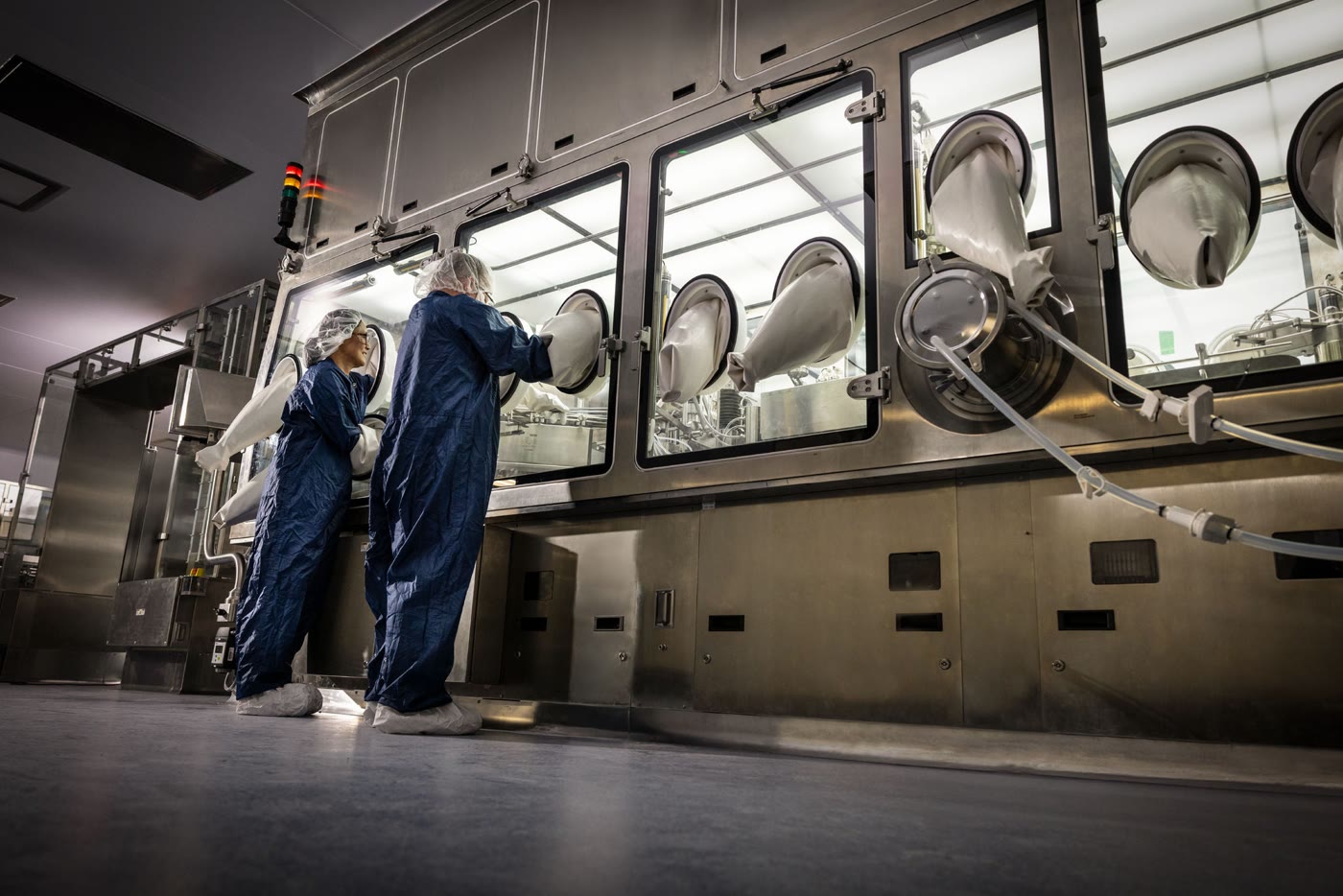
Discovery is legible. It has names attached, Banting and Best, Boyer and Swanson, and Nobel Prizes, and magazine covers. The thing Lilly has been good at for a hundred and fifty years is not legible at all. It is a stopwatch on a capsule line in 1911, a chemist finding the acidity at which insulin precipitates clean in the autumn of 1922, a fermentation plant built in Liverpool before the FDA had said yes, a manager in 1913 putting air conditioning in a factory, and $50 billion of plants announced in press releases nobody reads. There are no prizes for it. There is a franchise that has lasted since 1923, and a market value that crossed a trillion dollars on a Friday in November while most of the people whose lives depend on the products had no idea it had happened.
The molecule is downstream. What Lilly is, at bottom, is the organization that could make the thing, in the years when the people who found the thing could not, and the ownership structure that let it wait, unbought, until the thing that needed making arrived. The one time it forgot that, and decided it was a marketing company instead, it took the company twenty years and $2.6 billion to remember.
Everyone can name the drugs, which was always the point; nobody was ever supposed to need to know who made them.
Go back to
the beginning.
Listen to The New Alchemist’s Eli Lilly, Part 1.
Episode, research notes & transcriptSources & further reading 8 references
- Madison’s account of the capsule plant
- ACS · Purification and production
- Lewis & Brubaker · The discovery of insulin revisited
- FDA · The development of biosynthetic insulin
- Classics in Chemical Neuroscience: Fluoxetine
- Lilly · Fourth-quarter 2001 results
- Lieberman and colleagues · CATIE, 2005
- U.S. Department of Justice, January 15, 2009